In today’s fast-paced world, every decision—whether personal or professional—involves some level of risk. From choosing investments to launching a new business venture, understanding how much risk you’re willing to take can make or break your success. This is where the concept of risk appetite comes in. But what is risk appetite, and how can you find yours?
This comprehensive guide explores risk appetite in depth, covering its definition, importance, and practical steps to assess it. Tailored for an Indian audience, it includes examples relevant to India’s financial landscape, cultural influences, and regulatory environment. Whether you’re an individual planning your finances or a business leader navigating strategic decisions, this article will help you understand and apply risk appetite effectively.”What Is Risk Appetite and How to Find Yours”
Table of Contents
1. What Is Risk Appetite?
Risk appetite is the amount and type of risk an individual or organization is willing to accept to achieve their goals. It’s about finding a balance between the potential rewards of taking risks and the uncertainties they bring. In simple terms, it’s like deciding how much adventure you’re ready for in pursuit of success.
Risk Appetite in Different Contexts
- Personal Finance: For individuals, risk appetite determines investment choices. Someone with a high risk appetite might invest in stocks or cryptocurrencies, while someone with a low risk appetite might prefer fixed deposits or government bonds.
- Business: In organizations, risk appetite guides strategic decisions, such as entering new markets or launching innovative products. It’s often formalized in a risk appetite statement, which sets boundaries for acceptable risk levels.
- Investing: Investors use risk appetite to decide how much market volatility they can handle. For example, a young investor with a long-term horizon might have a higher risk appetite than someone nearing retirement.
Risk Appetite vs. Risk Tolerance
A common point of confusion is the difference between risk appetite and risk tolerance. While related, they’re distinct:
- Risk Appetite: Your willingness to take risks. It’s about what you want to do.
- Risk Tolerance: Your ability to withstand the consequences of those risks. It’s about what you can handle.
For example, a young professional might have a high risk appetite, eager to invest in volatile stocks for high returns. However, if they have limited savings, their risk tolerance might be low, meaning they can’t afford significant losses. Understanding both helps you make balanced decisions.
In India, risk appetite is particularly relevant due to the diverse financial landscape. Investors often choose between traditional options like gold and modern instruments like mutual funds, guided by their risk appetite.
2. Why Is Risk Appetite Important?

Understanding your risk appetite is crucial for several reasons. It shapes your decisions, aligns your actions with your goals, and helps you avoid unnecessary stress or regret. Here’s why it matters:
Informed Decision-Making
Knowing your risk appetite ensures you make choices that match your comfort level. For instance, if you’re uncomfortable with market fluctuations, you might avoid stocks and opt for fixed deposits. This prevents you from taking on risks that keep you up at night.
Effective Risk Management
A clear risk appetite allows you to manage risks proactively. You can implement strategies to mitigate risks that exceed your appetite while capitalizing on those that align with it. For businesses, this might mean setting limits on financial exposure or operational risks.
Alignment with Goals
Your risk appetite should reflect your objectives. For example:
- Short-term goals (e.g., buying a car in two years) often require a low risk appetite, favoring stable investments.
- Long-term goals (e.g., retirement planning) allow for a higher risk appetite, as you have time to recover from market dips.
Avoiding Regret
Taking on too much risk can lead to losses that cause regret, while being overly cautious might mean missing out on growth opportunities. A well-defined risk appetite helps you find the right balance.
Transparency in Business
For organizations, a clear risk appetite statement communicates the company’s stance on risk to stakeholders, employees, and investors. This fosters trust and ensures everyone is on the same page.
Example: Imagine two Indian investors. Priya, with a high risk appetite, invests in equity mutual funds, aiming for high returns over 10 years. Raj, with a low risk appetite, sticks to fixed deposits for his daughter’s education in three years. Both make choices aligned with their risk appetites, increasing their chances of success.
3. How to Assess Your Risk Appetite

Finding your risk appetite involves understanding your comfort with uncertainty, financial situation, and goals. Here are practical steps to assess it:
Self-Reflection
Start by asking yourself key questions:
- How would I feel if my investment lost 20% of its value?
- Am I comfortable with investments that fluctuate daily?
- What are my financial goals (e.g., buying a house, retirement, funding education)?
- How have I reacted to financial risks in the past?
Your answers provide insight into your risk appetite. For example, if market dips make you anxious, you likely have a low risk appetite.
Risk Tolerance Questionnaires
Many financial institutions, such as Bajaj Finserv or HDFC, offer risk tolerance questionnaires. These tools present hypothetical scenarios (e.g., “What would you do if your investment dropped 10%?”) and categorize you as conservative, moderate, or aggressive. You can find such tools online or through financial advisors.
Financial Goals and Time Horizon
Your investment horizon significantly influences your risk appetite:
- Long-term goals (e.g., retirement in 20 years) allow for higher-risk investments like stocks, as you have time to recover from losses.
- Short-term goals (e.g., a vacation in two years) require lower-risk options like fixed deposits to protect your capital.
Current Financial Situation
Your financial stability affects your risk appetite. If you have a steady income, emergency savings, and no major debts, you might be more open to risk. Conversely, if you’re living paycheck to paycheck, a low risk appetite is safer.
Personality and Experience
Your personality—whether cautious or adventurous—shapes your risk appetite. Past experiences also matter. For instance, if you’ve lost money in stocks before and felt stressed, you might lean toward safer investments.
Indian Context
In India, cultural factors often lead to a conservative risk appetite. Many prefer gold, real estate, or fixed deposits due to their perceived safety. However, with growing financial literacy and access to platforms like Zerodha or Groww, younger investors are exploring higher-risk options like equities or cryptocurrencies.
Example: An Indian investor, Anil, wants to save for his child’s education in five years. He takes a risk tolerance questionnaire and realizes he’s uncomfortable with market volatility. He opts for a mix of fixed deposits and debt mutual funds, reflecting a moderate risk appetite.
4. Risk Appetite in Business
In the corporate world, risk appetite is a cornerstone of enterprise risk management (ERM). It helps businesses balance growth opportunities with the need to protect assets and reputation.
Defining Risk Appetite in Business
A business’s risk appetite is typically set by its board of directors and senior management. It’s formalized in a risk appetite statement, which outlines:
- Types of risks (e.g., financial, operational, strategic) the organization is willing to take.
- Acceptable levels of risk exposure.
- Thresholds for when action is needed to mitigate risks.
For example:
- A tech startup might have a high risk appetite, investing heavily in unproven technologies for potential market dominance.
- A public sector bank in India might have a low risk appetite, prioritizing regulatory compliance and stability.
Developing a Risk Appetite Framework
Creating a risk appetite framework involves:
- Defining Objectives: Align the framework with the organization’s strategic goals, such as market expansion or profitability.
- Identifying Risks: Assess risks that could impact those goals, such as market volatility or regulatory changes.
- Setting Tolerances: Define acceptable risk levels for each category (e.g., a 5% revenue loss is acceptable, but 10% requires action).
- Monitoring and Reporting: Regularly track risk exposure against the defined appetite.
- Adjusting as Needed: Update the framework as the business or market evolves.
Indian Context
In India, businesses must navigate a complex regulatory environment. The Reserve Bank of India (RBI) mandates that banks maintain a robust risk appetite framework to ensure financial stability. Cultural factors, such as a preference for stability, also influence corporate risk appetite. For example, traditional industries like manufacturing may have lower risk appetites, while tech and e-commerce firms embrace higher risks.
Case Study: Reliance Industries’ acquisition of Future Group’s retail assets involved significant financial and operational risks but aligned with its high risk appetite to dominate India’s retail sector.
5. Risk Appetite in Investments
Your risk appetite directly influences your investment choices. Here’s how it applies to common investment options in India:
| Investment Type | Risk Level | Suitability | Examples |
|---|---|---|---|
| Fixed Deposits (FDs) | Low | Low risk appetite, short-term goals | Bank FDs, Post Office FDs |
| Debt Mutual Funds | Moderate | Moderate risk appetite, balanced approach | Corporate bond funds |
| Equity Mutual Funds | High | Moderate to high risk appetite, long-term | Large-cap, mid-cap funds |
| Stocks | High | High risk appetite, market knowledge | Reliance, TCS shares |
| Cryptocurrencies | Very High | Very high risk appetite, speculative | Bitcoin, Ethereum |
Aligning Investments with Risk Appetite
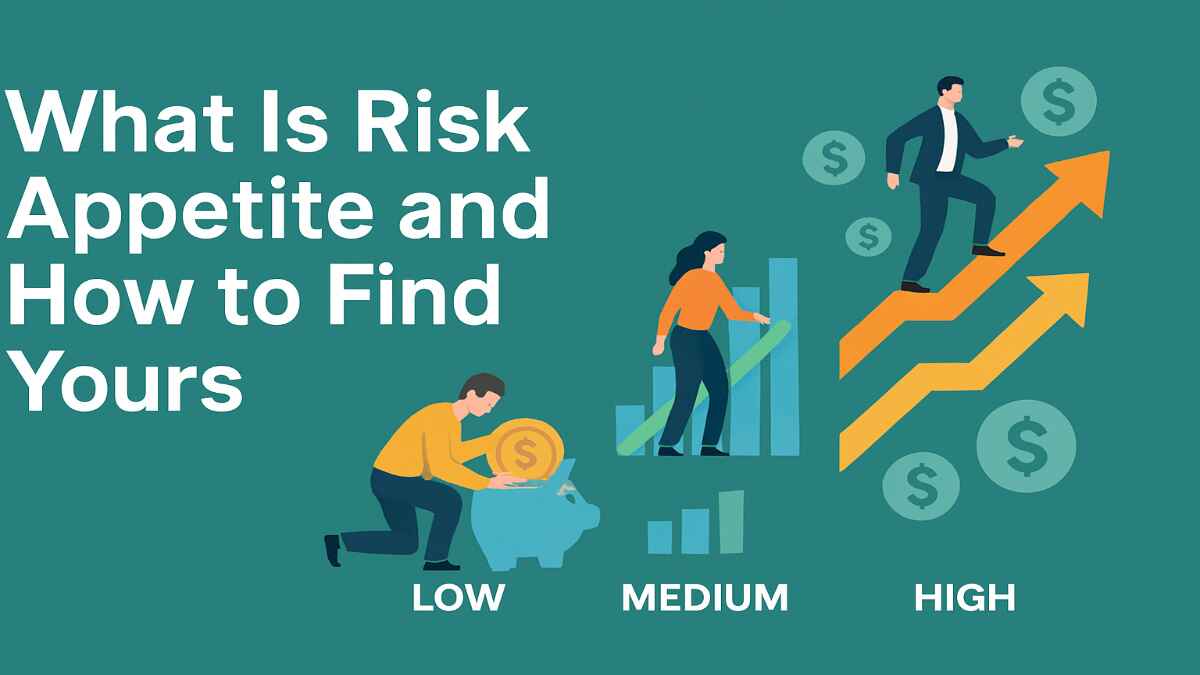
- Conservative Investors: Prefer capital protection, choosing FDs, PPF, or gold. These offer predictable returns with minimal risk.
- Moderate Investors: Take calculated risks, balancing debt and equity mutual funds for growth and stability.
- Aggressive Investors: Seek high returns, investing in stocks, derivatives, or cryptocurrencies, accepting significant volatility.
In India, SEBI regulates investment products to ensure transparency, helping investors choose options that match their risk appetite. Platforms like Zerodha and Groww make it easier to access diverse investments, catering to varying risk profiles.
Example: Priya, a 30-year-old professional, has a high risk appetite and invests 70% of her portfolio in equity mutual funds and 30% in debt funds. Raj, a 50-year-old nearing retirement, has a low risk appetite and allocates 80% to FDs and 20% to debt funds.
6. Risk Appetite in the Indian Context
India’s financial landscape is unique, shaped by cultural, economic, and regulatory factors that influence risk appetite.
Cultural Influences
- Preference for Tangible Assets: Many Indians view gold and real estate as safe investments, reflecting a conservative risk appetite. Gold, in particular, is seen as a hedge against inflation and uncertainty.
- Savings Culture: A strong emphasis on saving for the future often leads to lower risk appetites, with many opting for guaranteed returns over speculative investments.
Economic and Regulatory Factors
- Growing Financial Literacy: Platforms like Zerodha, Groww, and educational campaigns by SEBI are encouraging younger investors to explore equities, increasing risk appetites.
- Regulatory Oversight: SEBI and RBI ensure transparency and investor protection, giving confidence to those with moderate to high risk appetites to explore market-linked investments.
- Diverse Investment Options: From traditional PPF and FDs to modern mutual funds and cryptocurrencies, India offers options for all risk appetites.
Case Study: Indian Startups
Indian startups like Zomato or Paytm have shown high risk appetites, raising significant capital and entering competitive markets. Their success highlights how a high risk appetite, when aligned with strategic vision, can lead to substantial rewards.
7. Developing a Risk Appetite Framework
For businesses, a risk appetite framework provides a structured approach to managing risks. Here’s how to create one:
- Engage Stakeholders: Involve senior management, board members, and key employees to ensure buy-in and alignment.
- Align with Strategy: Ensure the risk appetite supports the organization’s goals, such as market expansion or innovation.
- Categorize Risks: Identify financial, operational, strategic, and compliance risks relevant to the business.
- Set Metrics: Define measurable indicators, such as maximum acceptable loss or downtime, to monitor risk exposure.
- Establish Governance: Create processes for reporting and reviewing risk appetite regularly.
- Communicate Clearly: Share the risk appetite statement across the organization to guide decision-making.
In India, businesses must also comply with RBI and SEBI guidelines, which emphasize robust risk management frameworks. Cultural nuances, such as a preference for stability, should also be considered.
Example: An Indian bank might set a low risk appetite for lending to high-risk sectors like real estate but a higher risk appetite for digital banking innovations to capture market share.
8. FAQs
What is the difference between risk appetite and risk tolerance?
Risk appetite is your willingness to take risks, while risk tolerance is your ability to handle the consequences. For example, you might want to invest in stocks (high risk appetite) but can’t afford losses (low risk tolerance).
How can I change my risk appetite?
Your risk appetite can evolve due to life events (e.g., marriage, retirement), financial changes, or new goals. Regularly reassess it using questionnaires or financial advisors to stay aligned with your circumstances.
Is risk appetite the same as risk capacity?
No. Risk capacity is the maximum risk you can afford to take without jeopardizing financial stability, while risk appetite is what you’re willing to take.
How does risk appetite affect insurance choices?
A high risk appetite might lead to minimal insurance coverage to save costs, while a low risk appetite might prompt comprehensive policies for peace of mind.
Can risk appetite be measured quantitatively?
Yes, businesses use metrics like maximum loss limits or probability of default. For individuals, it’s often assessed qualitatively through questionnaires or self-reflection.
Conclusion
Understanding What Is Risk Appetite and How to Find Yours? is a vital step toward making informed decisions in personal finance and business. By assessing your risk appetite, you can align your investments, strategies, and goals with your comfort level, avoiding stress and maximizing success. In India, where cultural and regulatory factors shape financial choices, this understanding is even more critical.
Whether you’re a conservative investor favoring fixed deposits or an aggressive entrepreneur launching a startup, your risk appetite is your guide. Revisit it regularly as your circumstances change, and use tools like questionnaires or professional advice to stay on track. By finding your risk appetite, you’ll be better equipped to balance risk and reward in your journey toward success.
Yes, businesses use metrics like maximum loss limits or probability of default. For individuals, it’s often assessed qualitatively through questionnaires or self-reflection.
Disclaimer: Moneyjack.in provides general financial information for educational purposes only. We are not financial advisors. Content is not personalized advice. Consult a qualified professional before making financial decisions. We are not liable for any losses or damages arising from the use of our content. Always conduct your own research.