Choosing the right mutual fund can be a game-changer for beginners who are stepping into the world of investments. How to Choose the Right Mutual Fund for Beginners is a crucial question that every new investor in India asks. This guide provides a comprehensive, step-by-step explanation of everything you need to know to make an informed and confident investment decision.
We’ll walk you through all aspects of mutual fund selection, from understanding your financial goals to analyzing fund performance, so you can invest wisely and securely.
Table of Contents
Understanding the Basics: What Is a Mutual Fund?
A mutual fund is a pool of money collected from many investors and managed by a professional fund manager. The manager invests this money in a diversified portfolio of stocks, bonds, or other securities. For beginners, mutual funds are an easy and efficient way to enter the stock market without directly buying individual stocks.
Why Mutual Funds Are Ideal for Beginners
How to Choose the Right Mutual Fund for Beginners often starts with understanding why mutual funds are ideal for new investors:
- Diversification: Reduces risk by spreading investments across various sectors.
- Professional Management: Expert fund managers handle the investments.
- Liquidity: Easy to enter and exit.
- Accessibility: Start with as low as ₹500 through SIPs (Systematic Investment Plans).
- Transparency: Regular updates and disclosures ensure clarity.
Step-by-Step Guide on How to Choose the Right Mutual Fund for Beginners
1. Define Your Investment Goals Clearly
Before investing, identify your objective:
- Wealth creation
- Saving for retirement
- Children’s education
- Buying a house
- Short-term goals like travel or emergency fund
The type of mutual fund you choose depends on your investment horizon and risk tolerance.
2. Know Your Risk Appetite
How to Choose the Right Mutual Fund for Beginners means understanding how much risk you’re comfortable with. Risk profiles are generally categorized as:
- Conservative: Prefer stability over high returns. Suitable for debt funds.
- Moderate: Accept some risk for balanced returns. Hybrid funds work well.
- Aggressive: Willing to take high risk for higher returns. Equity funds are the go-to.
3. Decide Between SIP and Lump Sum
For beginners, Systematic Investment Plans (SIPs) are highly recommended. They allow you to invest small amounts regularly, reducing the impact of market volatility and promoting disciplined investing.
Lump sum investment is suitable if you have a large amount ready and wish to invest at once.
4. Choose the Right Category of Mutual Fund
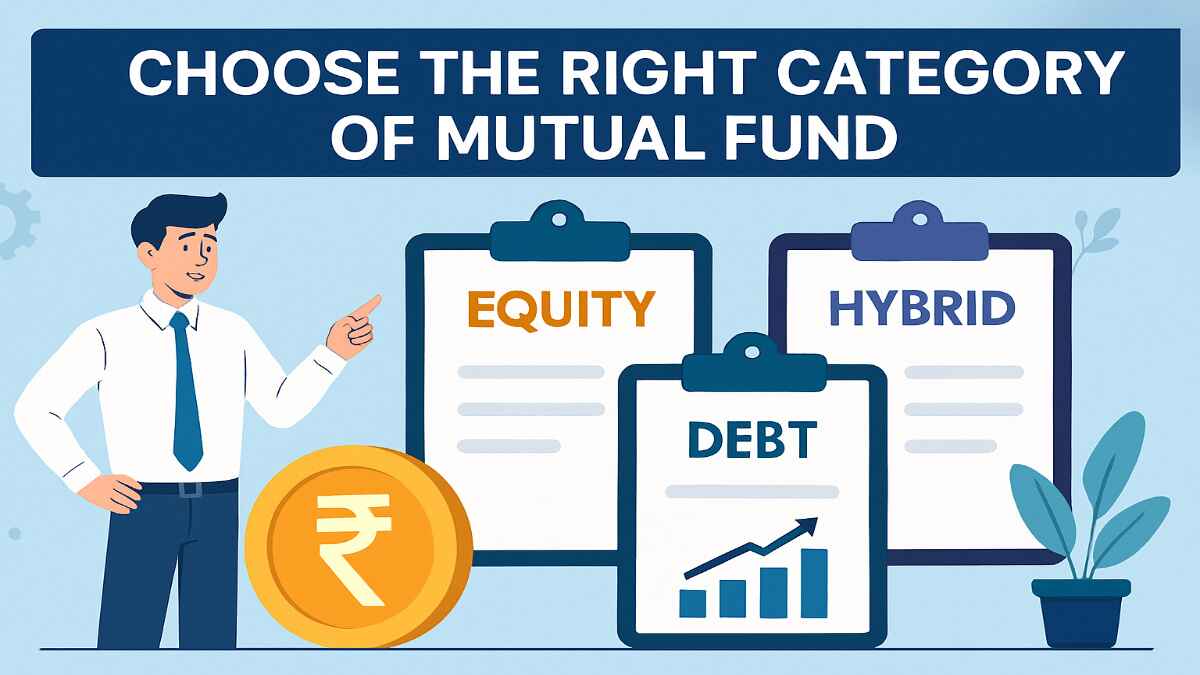
There are various types of mutual funds based on where they invest:
- Equity Funds: Invest in stocks. Suitable for long-term growth.
- Debt Funds: Invest in bonds and fixed-income instruments. Ideal for low-risk appetite.
- Hybrid Funds: Mix of equity and debt. Great for moderate-risk investors.
- Index Funds: Passive funds that mimic indices like Nifty or Sensex. Low expense ratio.
- ELSS (Equity Linked Saving Schemes): Offer tax benefits under Section 80C.
5. Analyze Fund Performance
When evaluating a mutual fund, don’t just look at recent performance. Consider:
- 3-year and 5-year returns: Long-term consistency matters.
- Benchmark comparison: Has the fund outperformed its benchmark index?
- Peer comparison: Is the fund performing better than similar funds?
6. Review Expense Ratio
The expense ratio is the annual fee charged by the fund house. A lower expense ratio means more of your money stays invested. Actively managed funds often have higher expense ratios compared to passive index funds.
7. Consider the Fund Manager’s Track Record
The expertise and past performance of the fund manager can significantly influence fund returns. Look for managers with consistent success across market cycles.
8. Check the Fund House Reputation
Established Asset Management Companies (AMCs) with a strong track record in fund management, compliance, and customer service are generally more reliable.
9. Evaluate Portfolio Holdings
A fund’s portfolio composition gives insight into where your money will be invested. Check:
- Sector allocation
- Top holdings
- Market cap distribution (large-cap, mid-cap, small-cap)
10. Read the Scheme Information Document (SID)
This document contains all details about the fund’s objective, investment strategy, risk factors, and more. As a beginner, reading the SID helps you make informed decisions.
11. Look at Exit Load and Lock-in Period
Exit Load is a fee charged when you redeem units before a specified period. Lock-in Period applies to funds like ELSS, which have a mandatory holding of 3 years. Be aware of these before investing.
12. Tax Implications Matter
For Indian investors:
- Equity Funds: LTCG (Long Term Capital Gains) tax of 10% on gains above ₹1 lakh after 1 year.
- Debt Funds: STCG (Short Term Capital Gains) tax based on your tax slab if held for less than 3 years.
Choose funds that align with your tax planning strategy.
13. Use Mutual Fund Rating Agencies
Websites like Morningstar, Value Research Online, and CRISIL rate mutual funds based on risk, returns, consistency, and performance. These ratings are useful but shouldn’t be the only factor in decision-making.
14. Start Small and Scale Gradually
As a beginner, it’s wise to start small. Begin with one or two funds, preferably through SIP. Observe how the market works and gradually scale up your investments.
15. Monitor and Review Your Investment Regularly
How to Choose the Right Mutual Fund for Beginners doesn’t end with selection. Regular review ensures your investments stay aligned with your goals. Review every 6–12 months and rebalance if needed.
Mistakes to Avoid While Choosing a Mutual Fund
- Chasing past returns without analyzing consistency
- Ignoring expense ratio
- Not reading fund objectives
- Choosing too many funds and over-diversifying
- Timing the market instead of investing regularly
Best Mutual Funds for Beginners in India (As of 2025)
While the market changes, a few mutual funds are often beginner-friendly:
- SBI Bluechip Fund
- Axis Long Term Equity Fund (ELSS)
- Mirae Asset Large Cap Fund
- HDFC Hybrid Equity Fund
- ICICI Prudential Balanced Advantage Fund
Note: Do your research before investing. This is not investment advice.
FAQs
Can I lose money in mutual funds?
Yes, mutual funds are market-linked and involve risk. However, long-term investments generally yield positive returns.
How much should a beginner invest in mutual funds?
Start with an amount you’re comfortable with. Many funds allow SIPs starting at ₹500 per month.
Which mutual fund is best for 1st-time investors?
Large-cap funds or balanced funds are ideal for first-time investors due to stability and moderate returns
How long should I stay invested?
At least 3 to 5 years for equity funds. Longer durations help ride out market volatility.
Are mutual funds safe?
Mutual funds are regulated by SEBI. They carry risk, but diversification and professional management reduce it.
Is SIP better than lump sum?
For beginners, SIP is safer as it averages the purchase cost and promotes disciplined investing.
Can I invest in mutual funds without a Demat account?
Yes, Demat account is not required for mutual fund investments. You can invest through fund houses or apps.
How can I track my mutual fund performance?
You can track performance via fund house apps, investment platforms, or statements sent to your email.
What documents are needed to start investing?
PAN card, Aadhaar card, bank account, and KYC compliance are mandatory.
Are mutual fund returns guaranteed?
No. Mutual funds are subject to market risk. Past performance doesn’t guarantee future returns.
How to Choose the Right Mutual Fund for Beginners is a decision that should be approached with clarity, patience, and research. With the right strategy, even a novice investor can build significant wealth over time.
If you’re just starting out, remember: It’s not about timing the market, but about time in the market.
Disclaimer: Moneyjack.in provides general financial information for educational purposes only. We are not financial advisors. Content is not personalized advice. Consult a qualified professional before making financial decisions. We are not liable for any losses or damages arising from the use of our content. Always conduct your own research.