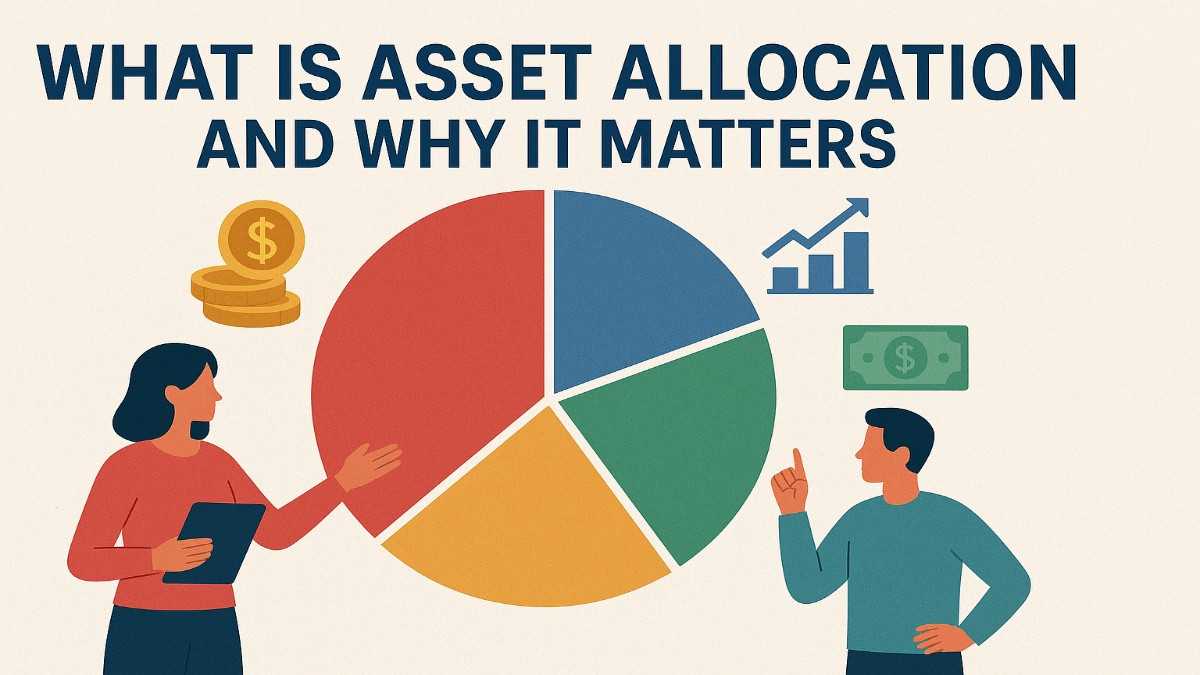
Hey there! If you’re dipping your toes into the world of investing, especially here in India where the stock market is buzzing with opportunities from the NSE and BSE, you’ve probably heard the term “asset allocation.” But what exactly is it, and why does it matter so much? In this article, we’re going to break it down in simple English, just like chatting over a cup of chai. We’ll explore what is asset allocation and why it matters in a way that’s easy to understand, with a focus on how it applies to everyday Indian investors like you and me.
Asset allocation isn’t some fancy jargon thrown around by stock market gurus on TV channels like CNBC Awaaz. It’s a straightforward strategy that helps you spread your money across different types of investments to balance risk and reward. Think of it as not putting all your eggs in one basket – a lesson our grandparents taught us with their simple savings habits. In India, where inflation can eat away at your savings and market volatility is common due to global events or elections, understanding what is asset allocation and why it matters is crucial for building wealth steadily.
Let me paint a picture: Imagine you’re planning a family trip from Bangalore to Goa. You wouldn’t just hop on one mode of transport, right? You’d mix it up – fly partway, take a train, maybe drive the last stretch. That’s asset allocation in investing. You divide your portfolio among stocks, bonds, gold, real estate, and more. Why? Because when one dips, others might rise, keeping your overall journey smooth. In the Indian context, with rising interest in mutual funds via apps like Groww or Zerodha, knowing what is asset allocation and why it matters can help you avoid common pitfalls like chasing hot stocks during bull runs.
Table of Contents
The Basics: Defining Asset Allocation
So, let’s start from the ground up. What is asset allocation and why it matters? At its core, asset allocation is the process of deciding how to divide your investment portfolio among various asset classes. These classes include equities (stocks), fixed income (bonds or fixed deposits), commodities (like gold), and alternative investments (such as real estate or peer-to-peer lending). In India, popular choices might be equity mutual funds for growth, PPF or EPF for safety, and gold ETFs during festive seasons.
Why does this division matter? Well, each asset class behaves differently. Stocks can give high returns but are volatile – remember the 2020 COVID crash when the Sensex plummeted? Bonds are steadier, offering regular interest like your bank’s RD. Gold acts as a hedge against inflation, which in India hovers around 5-7% annually. By allocating wisely, you reduce the chance of losing big if one market tanks. For instance, during the 2008 financial crisis, diversified Indian portfolios fared better than those heavy on stocks.
In simple terms, asset allocation is about risk management. If you’re young, say in your 20s working in IT in Hyderabad, you might allocate more to stocks for growth. But if you’re nearing retirement in Kolkata, you’d lean towards safer bonds. This personalization is why what is asset allocation and why it matters – it’s not one-size-fits-all; it’s tailored to your life stage, goals, and risk tolerance.
Historical Perspective: How Asset Allocation Evolved in India
To truly grasp what is asset allocation and why it matters, let’s look back. In pre-liberalization India (before 1991), options were limited – mostly bank FDs, post office schemes, and gold jewelry. People allocated based on tradition: Save in banks, buy gold for weddings. Post-1991, with markets opening up, mutual funds and stocks became accessible. Icons like Rakesh Jhunjhunwala showed how diversified allocation could build fortunes.
Today, with digital platforms, even a farmer in rural Punjab can allocate via SIPs in mutual funds. The SEBI regulations have made it safer, emphasizing diversification. Studies from CRISIL show that over 10 years, balanced portfolios (50% equity, 50% debt) outperformed pure equity in volatile periods. This history underscores what is asset allocation and why it matters – it’s evolved to protect against India’s economic ups and downs, from demonetization to GST implementation.
Why Asset Allocation Matters: The Key Benefits
Now, let’s dive deeper into why what is asset allocation and why it matters. First off, it minimizes risk. In India, where monsoons can affect agriculture stocks or oil prices impact everything, spreading investments cushions blows. For example, if IT stocks fall due to US recession fears, your bond holdings might hold steady.
Second, it optimizes returns. By rebalancing periodically – say, selling some stocks when they’re high and buying bonds – you buy low, sell high automatically. A Vanguard study (adapted to Indian markets) suggests asset allocation determines 90% of portfolio returns, not stock picking.
Third, it aligns with goals. Saving for a child’s education? Allocate to growth-oriented assets early, shift to safety later. For Indians, with high education costs (think IIT fees at lakhs), this planning is vital.
Emotionally, it prevents panic selling. During the 2022 market dip, diversified investors stayed calm while others lost sleep. Tax-wise, in India, long-term capital gains on equities are taxed at 12.5% above ₹1.25 lakh, so allocation helps manage that.
In essence, what is asset allocation and why it matters because it turns investing from gambling into a science, especially in a diverse economy like India’s.
Types of Asset Allocation Strategies

Understanding what is asset allocation and why it matters involves knowing the strategies. There’s strategic allocation: Set a fixed mix, like 60% equity, 40% debt, and stick to it long-term. Ideal for beginners using index funds.
Tactical allocation: Adjust based on market conditions. If Sensex is overvalued, shift to debt. Requires market savvy, common among HNIs in Delhi.
Dynamic allocation: Automatically adjusts with age or market. Many hybrid mutual funds in India do this.
Life-cycle allocation: Changes with life stages. Young? Aggressive. Older? Conservative.
For Indians, with apps like ET Money offering robo-advisors, these are easy to implement. Remember, no strategy is foolproof; it’s about consistency.
Asset Allocation in the Indian Context
Let’s make this relevant to India. What is asset allocation and why it matters here, where family obligations like weddings or elder care add pressure? Start with equities: Nifty 50 for blue-chips, mid-caps for growth. Allocate 50-70% if young.
Debt: Corporate bonds, government securities via Bharat Bond ETF. Safe, with yields around 7%.
Gold: Digital gold or SGBs during Akshaya Tritiya. 5-10% allocation hedges rupee depreciation.
Real estate: REITs like Embassy for liquidity without buying property.
Crypto? Emerging, but risky – limit to 1-2%.
With RBI’s inflation targeting, allocation helps beat it. For NRIs, factor in forex risks.
Common Mistakes in Asset Allocation
Even pros err, so knowing what is asset allocation and why it matters includes avoiding pitfalls. Over-diversification: Too many funds dilute returns.
Under-diversification: All in stocks, like during 2021 bull run, leading to losses.
Ignoring rebalancing: Let equity grow to 80%, then crash hits hard.
Chasing trends: Allocating to EVs because it’s hot, ignoring fundamentals.
Emotional decisions: Selling low during corrections.
In India, tax ignorance: Not using ELSS for 80C benefits.
To fix: Review annually, use tools like Value Research.
Building Your Asset Allocation Plan
Ready to start? What is asset allocation and why it matters becomes clear when you build one. Assess risk: Conservative? 30% equity. Moderate? 50%. Aggressive? 70%.
Set goals: Short-term (vacation) – debt heavy. Long-term (retirement) – equity focus.
Calculate investable amount: Say ₹10 lakhs. Allocate: ₹5L equity, ₹3L debt, ₹1L gold, ₹1L cash.
Choose vehicles: Mutual funds for ease, direct stocks if experienced.
Monitor: Use apps like Moneycontrol.
For Indians, factor in EPF/PPF as base.
The Role of Diversification Within Allocation
Diversification is asset allocation’s best friend. Within equities, mix large-cap (Tata, Reliance), mid-cap (new-age firms). In debt, government vs. corporate.
Why? Reduces specific risks. If Adani stocks fall, your diversified equity holds up.
In India, sector diversification: Not all in pharma during COVID.
Global diversification: Via international funds, hedge against rupee fall.
This layered approach amplifies why what is asset allocation and why it matters.
Asset Allocation for Different Life Stages
Your age matters. In 20s-30s: High equity (70-80%) for growth. Mid-career (40s): Balanced (50-60%).
Pre-retirement (50s): Conservative (40% equity).
Retirement: Income-focused, 20-30% equity.
For Indian women, post-marriage or maternity, adjust for breaks.
Kids? Education funds with goal-based allocation.
Impact of Economic Factors on Allocation
India’s economy influences what is asset allocation and why it matters. Inflation high? More gold/equity.
Interest rates rising? Shift to debt.
GDP growth: Bullish on stocks.
Global cues: US Fed hikes affect FII flows.
Budget announcements: Tax changes prompt reallocation.
Stay informed via Economic Times.
Tools and Resources for Asset Allocation in India
Apps: Groww, Paytm Money for calculators.
Websites: NSE India for education.
Books: “Rich Dad Poor Dad” adapted, or Indian ones like “Let’s Talk Money” by Monika Halan.
Advisors: SEBI-registered for personalized plans.
Free tools: Morningstar for fund analysis.
Case Studies: Real-Life Examples from India
Meet Raj from Chennai: Allocated 60% equity, 30% debt, 10% gold. During 2020, equity dipped but recovered; overall up 15%.
Priya from Ahmedabad: Ignored allocation, all in stocks – lost 40% in crash.
These show what is asset allocation and why it matters in action.
Future Trends in Asset Allocation
Looking ahead, ESG investing rises. Robo-advisors automate.
Crypto integration, but regulated.
AI-driven allocation via apps.
For India, with growing middle class, more options.
Rebalancing: Keeping Your Allocation on Track
Rebalance yearly or when drift >5%. Sell winners, buy losers.
Tax implications: Use in tax-free accounts.
This maintenance is key to why what is asset allocation and why it matters.
Psychological Aspects of Asset Allocation
Investing is mental. Allocation reduces fear, greed.
Behavioral finance: Indians often bias towards gold – balance it.
Mindfulness helps stick to plan.
Asset Allocation vs. Other Strategies
Vs. stock picking: Allocation is broader.
Vs. timing: Harder, allocation steadier.
Combined, powerful.
Conclusion: Embrace Asset Allocation for Financial Freedom
Wrapping up, what is asset allocation and why it matters is clear: It’s your roadmap to smart investing in India. Start small, stay consistent, and watch your wealth grow. Whether saving for a Maruti car or a dream home, this strategy empowers you.
I’ve used the phrase “what is asset allocation and why it matters” naturally throughout to emphasize the core idea, aiming for SEO by repeating key terms without spamming.
Now, let’s address common questions in the FAQ section.
FAQ
What is the ideal asset allocation for beginners in India?
For beginners, a 50-60% equity, 30-40% debt, 10% gold mix is good. Adjust based on risk.
How often should I rebalance my portfolio?
Annually or when allocation drifts by 5-10%.
Can asset allocation guarantee returns?
No, but it manages risk better than not allocating.
What’s the difference between asset allocation and diversification?
Allocation is across classes; diversification within classes.
Is asset allocation suitable for short-term goals?
For short-term, focus on debt; long-term, include equity.
How does inflation affect asset allocation in India?
High inflation? Allocate more to equity/gold to beat it.
What role do taxes play in asset allocation?
Choose tax-efficient options like ELSS for equity.
Can I do asset allocation without a financial advisor?
Yes, with apps and education.
What’s the biggest mistake in asset allocation?
Not starting or ignoring rebalancing.
How has asset allocation changed post-COVID in India?
More emphasis on liquidity and global diversification
Disclaimer: Moneyjack.in provides general financial information for educational purposes only. We are not financial advisors. Content is not personalized advice. Consult a qualified professional before making financial decisions. We are not liable for any losses or damages arising from the use of our content. Always conduct your own research.