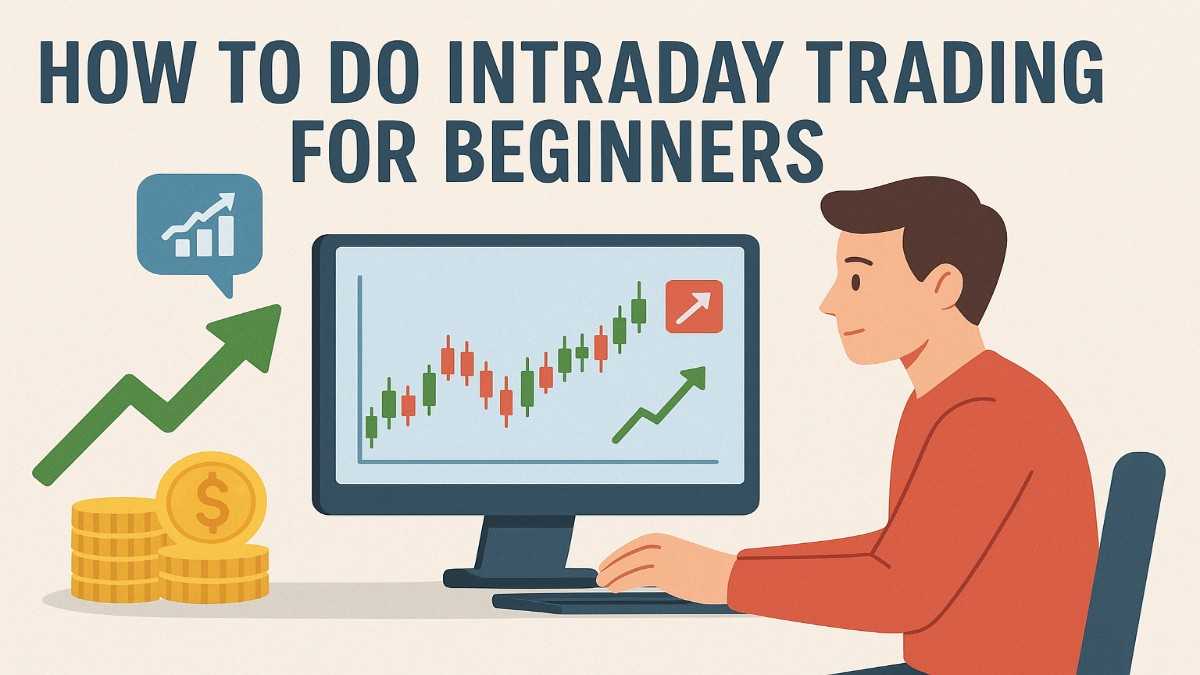
Hey there! If you’re just stepping into the world of stock markets in India and wondering how to do intraday trading for beginners, you’ve come to the right place. Intraday trading, or day trading as it’s often called, is all about buying and selling stocks within the same day to make quick profits from small price changes. It’s exciting, fast-paced, and can be rewarding if done right. But let’s be honest—it’s not a get-rich-quick scheme. Many beginners jump in without proper knowledge and end up losing money. That’s why I’m here to guide you through how to do intraday trading for beginners in a simple, step-by-step way.
As someone who’s seen the ups and downs of the Indian stock market, I’ll keep this article in a friendly, human tone. We’ll cover everything from the basics to advanced tips, focusing on the Indian context with exchanges like the NSE (National Stock Exchange) and BSE (Bombay Stock Exchange). By the end, you’ll feel more confident about how to do intraday trading for beginners. And remember, this is tailored for 2025, with the latest SEBI regulations in mind to keep things safe and legal.
Intraday trading has grown hugely in India, thanks to apps and low-cost brokers. But success comes from learning the ropes properly. In this guide, we’ll explore what intraday trading is, its benefits and risks, how to get started, strategies, and much more. Stick around, and let’s make sure you’re equipped to trade smartly.
Table of Contents
What Is Intraday Trading?
First things first: let’s break down what intraday trading really means, especially if you’re figuring out how to do intraday trading for beginners. Intraday trading involves buying shares in the morning and selling them before the market closes at 3:30 PM IST. You don’t hold positions overnight, which means no worrying about what happens after hours.
In India, this happens on platforms connected to NSE or BSE. Unlike delivery trading, where you can keep stocks for days or years, intraday requires squaring off your positions the same day. If you forget, your broker might do it for you, but that could come with penalties.
Why do people love it? Because you can leverage your capital. Brokers offer margin trading, where you might trade with 5-10 times your actual money. For example, with Rs. 10,000, you could control Rs. 50,000 worth of stocks. But beware—leverage amplifies both profits and losses.
According to recent data, intraday trading volumes on NSE have surged, with millions of retail traders participating daily. It’s popular among young Indians looking for side income. But as a beginner, start small. Understand that it’s speculative and treated as business income for taxes.
Benefits of Intraday Trading for Beginners
Now, why should you consider how to do intraday trading for beginners? There are some real perks, especially in the volatile Indian market.
One big benefit is quick profits. If a stock like Reliance jumps 2% in a day, you can cash in without waiting weeks. No overnight risks either—global events won’t hit your positions while you sleep. Plus, with low brokerage fees from discount brokers, costs are minimal.
Another advantage is learning market dynamics fast. You’ll get hands-on experience with charts, news, and trends. In India, where markets are influenced by monsoon reports or budget announcements, this sharpens your skills.
Liquidity is high too. Stocks like HDFC Bank or Infosys trade millions of shares daily, making it easy to enter and exit. And with apps, you can trade from your phone in Mumbai or a village in Rajasthan.
But it’s not all sunshine. The thrill can lead to addiction if not managed.
Risks Involved in Intraday Trading
Before diving deeper into how to do intraday trading for beginners, let’s talk risks. The stock market isn’t a casino, but intraday can feel like one if you’re unprepared.
The biggest risk is volatility. Prices can swing wildly due to news like a SEBI announcement or international tensions. You might buy Tata Motors at Rs. 800, only to see it drop to Rs. 780 in minutes, wiping out your margin.
Leverage is a double-edged sword. That 5x margin? It means losses multiply too. Many beginners lose their entire capital in one bad trade.
Emotional trading is another pitfall. Greed or fear can make you hold losing positions, hoping for a turnaround that never comes.
In India, regulatory risks apply. SEBI’s 2025 rules require full premium upfront for options and intraday monitoring of positions to curb excessive speculation. Violate them, and you face penalties.
Taxes? Intraday profits are taxed as business income at your slab rate, up to 30%. No long-term capital gains benefits here.
To mitigate, always use stop-loss orders and trade only what you can afford to lose.
Getting Started: Requirements for Intraday Trading in India
Ready to learn how to do intraday trading for beginners? Start with the basics. You need a demat and trading account. Demat holds your shares electronically, while trading lets you buy/sell.
Open one with a SEBI-registered broker. Popular ones include Zerodha, Groww, or Upstox—known for low fees and user-friendly apps. In 2025, Interactive Brokers is great for advanced tools, but for beginners, stick to Indian discount brokers.
You’ll need PAN card, Aadhaar, bank proof, and a photo. The process is online and takes 1-2 days.
Fund your account with at least Rs. 20,000-50,000 to start comfortably. Learn the platform—practice on demo accounts offered by brokers like Angel One.
Understand timings: Market opens at 9:15 AM, closes at 3:30 PM. Pre-open from 9:00 AM for order placement.
SEBI mandates KYC and risk disclosures, so read them carefully.
Choosing the Right Broker for Intraday Trading

Picking a broker is key when learning how to do intraday trading for beginners. In India, go for ones with low intraday brokerage—often Rs. 20 per order or 0.01%.
Top picks for 2025: Zerodha for reliability, Groww for simplicity, Angel One for research tools. If you want high leverage, check Pocketful, but remember SEBI caps it.
Look for fast execution, mobile apps, and customer support. Avoid brokers with hidden fees.
Read reviews on sites like MouthShut or Trustpilot. A good broker makes your journey smoother.
Understanding Stock Market Basics for Intraday
To master how to do intraday trading for beginners, grasp market fundamentals. Stocks represent company ownership. Prices move based on supply-demand, news, earnings.
Key indices: Nifty 50 (top 50 NSE stocks), Sensex (top 30 BSE). Track them for market sentiment.
Learn about sectors—IT, banking, pharma. Trade in familiar ones, like banking if you follow RBI news.
Economic indicators like GDP, inflation affect markets. In India, watch Union Budget, RBI policy.
Use charts: Candlestick patterns show price action. Bullish engulfing means uptrend, bearish for down.
Technical Analysis for Intraday Traders
Technical analysis is crucial in how to do intraday trading for beginners. It uses charts and indicators to predict moves.
Popular indicators: Moving Averages (SMA/EMA)—crossover signals buy/sell. RSI (Relative Strength Index) spots overbought/oversold.
Support/resistance levels: Prices bounce off them.
Volume: High volume confirms trends.
Tools like TradingView or broker charts help. For beginners, start with 5-minute charts.
Practice identifying patterns like head and shoulders or flags.
Fundamental Analysis Basics for Day Traders
While technicals dominate, fundamentals matter in how to do intraday trading for beginners. Check company news, earnings reports.
In India, use Moneycontrol or NSE site for data.
For intraday, focus on events like quarterly results or mergers.
Combine with technicals for better decisions.
Best Intraday Trading Strategies for Beginners
Let’s get to strategies in how to do intraday trading for beginners. Start with simple ones.
- Momentum Trading: Buy stocks rising fast, sell when momentum fades. Use scanners for gappers.
- Breakout Strategy: Trade when price breaks resistance with volume.
- Scalping: Make many small trades for tiny profits. Needs speed.
- Reversal Trading: Spot trend changes with indicators like MACD.
- Gap and Go: Trade stocks gapping up at open.
In India, apply to liquid stocks like SBI, TCS.
Backtest strategies on historical data.
Risk Management Techniques
Risk management is non-negotiable in how to do intraday trading for beginners. Never risk more than 1-2% of capital per trade.
Use stop-loss: Set a price to auto-sell if it goes against you.
Position sizing: Calculate based on risk. If stop-loss is Rs. 5 away, and risk Rs. 500, trade 100 shares.
Diversify: Don’t put all in one stock.
Keep a trading journal to review mistakes.
Tools and Software for Intraday Trading
Tools make how to do intraday trading for beginners easier. Broker apps like Kite (Zerodha) have charts, alerts.
Advanced: MetaTrader or Amibroker for custom indicators.
News apps: CNBC, Economic Times for real-time updates.
Scanners: Find stocks with high volume or breakouts.
In 2025, AI tools are emerging, but stick to basics first.
Common Mistakes Beginners Make in Intraday Trading
Avoid pitfalls when learning how to do intraday trading for beginners. Top mistakes: No plan—trading randomly.
Overtrading: Too many trades lead to fees and exhaustion.
Ignoring stop-loss: Hoping losses reverse.
Emotional decisions: Revenge trading after losses.
Trading illiquid stocks: Hard to exit.
Learn from these—practice discipline.
Tips for Success in Intraday Trading
Success tips for how to do intraday trading for beginners: Start with paper trading.
Trade during high volatility hours: 9:30-11 AM.
Stay updated with news.
Set realistic goals: 1-2% profit per day.
Continuous learning: Read books like “How to Make Money in Stocks.”
Join communities on Reddit or Telegram for Indian traders.
Legal and Tax Aspects in India
In India, SEBI oversees intraday trading. 2025 rules include intraday position monitoring and full margin upfront.
Taxes: Profits as business income. Slabs: Up to Rs. 2.5L nil, then 5-30%. Losses can offset future profits.
File ITR-3 if trading is business.
Consult a CA for accuracy.
Conclusion: Mastering How to Do Intraday Trading for Beginners
Wrapping up, how to do intraday trading for beginners is about education, discipline, and practice. Start small, learn from mistakes, and grow. In India’s dynamic market, with proper strategies, you can succeed. Remember, it’s a marathon, not a sprint. Happy trading!
FAQ
What is intraday trading?
Intraday trading is buying and selling stocks on the same day without holding overnight.
Is intraday trading suitable for beginners in India?
Yes, but start with education and small capital to minimize risks.
How much money do I need to start intraday trading?
Rs. 20,000-50,000 is a good starting point for beginners.
What are the best stocks for intraday trading in India?
Liquid ones like Reliance, HDFC Bank, Infosys with high volume.
Can I do intraday trading on mobile?
Yes, most brokers have apps for it.
What time is best for intraday trading?
First hour after open (9:15-10:15 AM) for volatility.
How is intraday profit taxed in India?
As business income at your slab rate.
What if I don’t square off my intraday position?
Broker auto-squares at market close, possibly with losses.
Do I need a demat account for intraday?
Yes, along with a trading account.
What are common intraday strategies?
Momentum, breakout, scalping.
Is leverage allowed in intraday trading?
Yes, but limited by SEBI rules.
How to avoid losses in intraday?
Use stop-loss, risk management, and trade with a plan.
Can I trade intraday in options?
Yes, but it’s riskier; know the basics first.
What apps are best for intraday in 2025?
Zerodha Kite, Groww, Angel One.
How does SEBI regulate intraday trading?
Through margins, position limits, and disclosures.
Disclaimer: Moneyjack.in provides general financial information for educational purposes only. We are not financial advisors. Content is not personalized advice. Consult a qualified professional before making financial decisions. We are not liable for any losses or damages arising from the use of our content. Always conduct your own research.