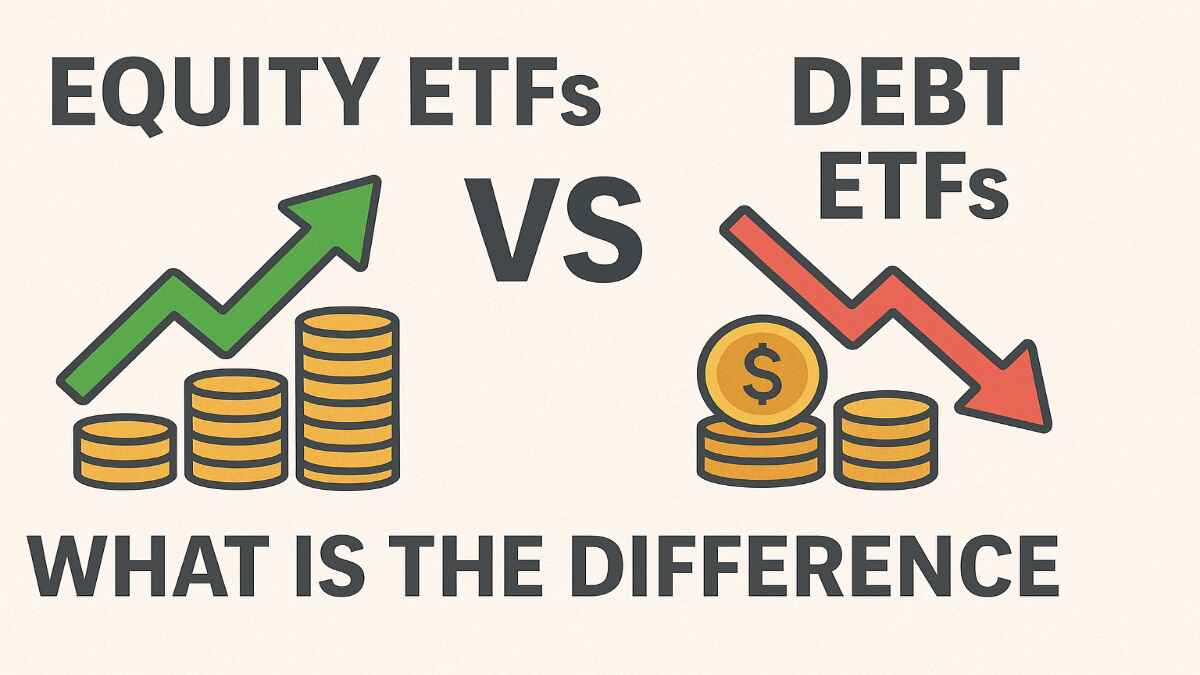
Hey there! If you’re dipping your toes into the world of investments in India, you’ve probably heard about ETFs – those handy exchange-traded funds that make diversifying your portfolio a breeze. But when it comes to choosing between equity ETFs and debt ETFs, things can get a bit confusing. That’s why today, we’re diving deep into “Equity ETFs vs Debt ETFs: What’s the Difference?” to help you make sense of it all. Whether you’re a beginner saving for your first home or a seasoned investor looking to balance your risks, understanding this comparison is key, especially in the Indian market where options are growing fast.Equity ETFs vs Debt ETFs What The Difference
In this article, I’ll break it down in simple English, just like chatting with a friend over chai. We’ll cover everything from the basics to tax rules, popular picks in 2025, and even some tips tailored for Indian investors. By the end, you’ll feel confident about deciding which one suits your goals. And yes, we’ll keep circling back to “Equity ETFs vs Debt ETFs: What’s the Difference?” because that’s the heart of it – helping you spot what sets them apart so you can invest smarter.
Table of Contents
What Are ETFs Anyway?
Before we jump into the nitty-gritty of “Equity ETFs vs Debt ETFs: What’s the Difference?”, let’s start with the fundamentals. ETFs, or Exchange-Traded Funds, are like baskets of investments that you can buy and sell on the stock exchange, just like shares. They’re popular in India because they’re affordable, transparent, and easy to trade through platforms like NSE or BSE.
Think of an ETF as a mutual fund that trades live during market hours. Unlike traditional mutual funds, which you buy or sell at the end of the day based on NAV (Net Asset Value), ETFs fluctuate in price throughout the day. This makes them flexible for quick moves. In India, ETFs have boomed since the early 2000s, with assets under management crossing Rs. 7 lakh crore by 2025. They’re regulated by SEBI, ensuring they’re safe and fair for everyday folks like you and me.
ETFs come in various flavors, but the two big ones are equity and debt. Equity ETFs focus on stocks, while debt ETFs stick to bonds and fixed-income stuff. This variety is what makes “Equity ETFs vs Debt ETFs: What’s the Difference?” such an important question – it boils down to risk, returns, and your personal financial vibe.
Diving into Equity ETFs
Now, let’s zoom in on equity ETFs. These are the thrill-seekers of the ETF world. An equity ETF invests mainly in company stocks, tracking indices like the Nifty 50 or Sensex. For example, if you buy a Nifty 50 ETF, you’re essentially owning a tiny slice of the top 50 companies in India, from Reliance to HDFC Bank.
Why do people love them? Equity ETFs offer the potential for high returns over the long haul. In a growing economy like India’s, where the stock market has averaged around 12-15% annual returns historically, these can supercharge your wealth. But here’s the catch in “Equity ETFs vs Debt ETFs: What’s the Difference?”: they’re volatile. Market ups and downs can make your investment swing wildly, especially during events like elections or global slowdowns.
In India, equity ETFs are super accessible. You can start with as little as Rs. 500 on apps like Groww or Zerodha. They’re passively managed, meaning low fees – often under 0.5% expense ratio – which beats many active mutual funds. If you’re young and can handle some risk, equity ETFs are a great way to build retirement savings or fund your kid’s education.
Let me share a quick story: Imagine Raj, a 30-year-old IT guy in Bangalore. He invested in an equity ETF tracking the Nifty during the 2020 dip. By 2025, his returns were up 50% thanks to India’s post-pandemic boom. That’s the power of equity ETFs – they ride the wave of economic growth.
Exploring Debt ETFs
On the flip side of “Equity ETFs vs Debt ETFs: What’s the Difference?” are debt ETFs. These are the steady Eddies, investing in government bonds, corporate debt, and other fixed-income securities. They track indices like the Nifty Bharat Bond Index, offering predictable returns through interest payments.
Debt ETFs shine for stability. In uncertain times, like the interest rate hikes in 2023-2024, they provide a cushion. Returns are modest – around 6-8% annually – but they’re less affected by stock market crashes. This makes them ideal for conservative investors or those nearing retirement.
In India, debt ETFs have gained traction with products like Bharat Bond ETFs, launched by the government to fund infrastructure. They’re liquid, meaning you can sell them quickly without big losses, and they often have even lower expense ratios than equity ones.
Picture Priya, a 50-year-old teacher in Mumbai. She shifted to debt ETFs for her emergency fund. Even when equities tanked in a 2025 mini-correction, her debt ETF held steady, giving her peace of mind. That’s the essence of debt ETFs – reliability over excitement.
Key Differences Between Equity ETFs and Debt ETFs

Alright, let’s get to the core: “Equity ETFs vs Debt ETFs: What’s the Difference?” Here are the main points, explained simply.
First, investment focus. Equity ETFs pour money into stocks for growth, while debt ETFs buy bonds for income. This means equity ones chase capital appreciation, but debt ones prioritize interest earnings.
Risk level is huge. Equity ETFs are high-risk due to market volatility – you could lose 20-30% in a bad year. Debt ETFs? Low to medium risk, as bonds are safer, backed by governments or solid companies.
Returns follow suit. Equity ETFs can deliver 10-15% over time, but debt ETFs stick to 5-8%, mirroring fixed deposits but with better liquidity.
Liquidity and trading: Both trade on exchanges, but debt ETFs might have slightly lower volumes in India, though that’s improving.
Diversification: Equity ETFs spread across sectors like tech and finance; debt across maturities and issuers.
In the Indian context, equity ETFs benefit from stock market reforms, while debt ones tie into RBI’s bond policies. Understanding “Equity ETFs vs Debt ETFs: What’s the Difference?” helps you align with your risk appetite.
Pros and Cons of Equity ETFs
Equity ETFs have upsides that make them appealing in “Equity ETFs vs Debt ETFs: What’s the Difference?”. Pros include high growth potential, low costs, and easy diversification. They’re tax-efficient too, with long-term gains taxed lightly.
But cons? Volatility can keep you up at night. They’re not great for short-term needs, and market crashes hit hard. In India, external factors like oil prices affect them more.
Pros and Cons of Debt ETFs
Shifting to debt in “Equity ETFs vs Debt ETFs: What’s the Difference?”, pros are stability, regular income, and lower risk. They’re perfect for preserving capital and beating inflation mildly.
Downsides? Lower returns mean slower growth. Interest rate changes can cause small losses, and they’re less exciting for aggressive investors. In India, with rising rates in 2025, they’ve been solid but not spectacular.
Which One Should You Choose? Factors to Consider
Deciding in “Equity ETFs vs Debt ETFs: What’s the Difference?” depends on you. Young? Go equity for growth. Older? Debt for safety. Mix both for balance – maybe 60% equity, 40% debt.
Consider goals: House down payment? Debt. Long-term wealth? Equity. Risk tolerance and time horizon matter. In India, inflation at 5-6% means equity might be needed to outpace it.
Economic outlook: Bullish markets favor equity; uncertain times, debt.
How to Invest in Equity and Debt ETFs in India

Investing is straightforward. First, open a demat and trading account with brokers like Zerodha or Upstox. No demat? Some platforms allow SIPs in ETFs now.
Search for ETFs on NSE – use codes like NIFTYBEES for equity. Buy during market hours, like stocks. Start small, diversify.
Tips: Research expense ratios, track error, and liquidity. Use apps for real-time tracking.
Tax Implications of Equity and Debt ETFs in India (2025)
Taxes differ big time in “Equity ETFs vs Debt ETFs: What’s the Difference?”. For equity ETFs: Hold over 12 months? LTCG at 12.5% on gains above Rs 1.25 lakh. Short-term? 20% STCG.
Debt ETFs: Post-2023 changes, no LTCG benefit. Gains taxed at your slab rate, whether short or long-term. Dividends? Added to income.
In 2025, budget tweaks made equity more attractive for long holds. Always consult a CA for personalized advice.
Popular Equity ETFs in India for 2025

Looking at top picks? SBI Nifty 50 ETF leads with low costs and strong tracking. Motilal Oswal NASDAQ 100 for global exposure. UTI Sensex ETF for blue-chips.
Others: Nippon India Nifty Bank BeES for banking sector. These have delivered 15-20% CAGR lately.
Popular Debt ETFs in India for 2025
For debt, Bharat Bond ETF series (April 2030, 2032) are favorites, offering 7% yields. Nippon India Nifty CPSE Bond Plus for PSU bonds.
ICICI Pru Bharat 22 for hybrid feel. They’re great for steady income.
Real-Life Examples and Case Studies
Take Amit from Delhi: He split 70% equity (Nifty ETF) and 30% debt (Bharat Bond). During 2025 volatility, debt cushioned losses.
Or Sneha: All-in on equity ETFs, grew her portfolio 40% in two years but stressed during dips.
These show “Equity ETFs vs Debt ETFs: What’s the Difference?” in action – balance wins.
Future Outlook for ETFs in India
By 2030, ETFs could hit Rs 15 lakh crore AUM. With digital push and awareness, more Indians will invest. Equity for growth, debt for bonds in rising rates.
Watch SEBI reforms for better liquidity.
Wrapping Up: Equity ETFs vs Debt ETFs: What’s the Difference?
We’ve covered a lot on “Equity ETFs vs Debt ETFs: What’s the Difference?”. Remember, equity for growth and risk, debt for stability. Start small, stay informed, and consult pros. Happy investing!
FAQ
What is the main difference in risk between equity and debt ETFs?
Equity ETFs carry higher risk due to stock market fluctuations, while debt ETFs are lower risk as they invest in bonds.
Are ETFs better than mutual funds in India?
ETFs often have lower costs and intraday trading, but mutual funds might suit SIPs better. It depends on your style.
How much tax do I pay on debt ETF gains in 2025?
Gains are taxed at your income slab rate, no long-term benefits.
Can I invest in ETFs without a demat account?
Traditionally no, but some platforms now offer ETF SIPs without one.
Which equity ETF is best for beginners in India?
Start with Nifty 50 ETF – simple and diversified.
Do debt ETFs provide regular dividends?
Yes, through interest from bonds, but it’s not guaranteed like FDs.
How does inflation affect equity vs debt ETFs?
Equity can beat inflation long-term; debt might struggle if rates don’t rise.
Is there a minimum investment for ETFs?
Often as low as one unit, around Rs. 50-100.
What’s the expense ratio for typical ETFs in India?
Under 0.5% for most, making them cost-effective.
Can foreigners invest in Indian ETFs?
Yes, through FPI routes, but check regulations.
Disclaimer: Moneyjack.in provides general financial information for educational purposes only. We are not financial advisors. Content is not personalized advice. Consult a qualified professional before making financial decisions. We are not liable for any losses or damages arising from the use of our content. Always conduct your own research.