Investing can feel like stepping into a new world, especially if you’re just starting out. With so many options available, it’s easy to get overwhelmed. Two of the most popular investment choices in India are stocks and Exchange-Traded Funds (ETFs). Both can help you grow your wealth, but they work differently and suit different types of investors. If you’re a beginner in India wondering, ETF vs Stock Which Is Better for Beginners?
Table of Contents
What Are Stocks?
Stocks represent a small piece of ownership in a company. When you buy a stock, you become a shareholder, meaning you own a part of that company. If the company does well—say, it launches a successful product or increases profits—the value of your stock can go up. Some companies also pay dividends, which are a share of their profits distributed to shareholders.
In India, stocks are traded on major exchanges like the Bombay Stock Exchange (BSE) and the National Stock Exchange (NSE). Popular stocks include household names like Reliance Industries, Infosys, Tata Consultancy Services (TCS), and HDFC Bank. For example, if you buy shares of Reliance Industries, you’re betting on the company’s future growth in sectors like telecom, retail, or energy.
Pros of Stocks for Beginners
- High Return Potential: If you pick a company that performs well, stocks can offer significant returns. For instance, companies like Infosys have historically delivered strong growth.
- Ownership Benefits: As a shareholder, you may get voting rights (for common stocks) or priority in dividends (for preferred stocks).
- Liquidity: Stocks are generally easy to buy and sell during market hours, especially for large companies like those in the Nifty 50.
Cons of Stocks for Beginners
- Higher Risk: Since your investment is tied to one company, if it struggles—due to poor management, market downturns, or competition—your stock’s value can drop significantly.
- Time and Research Intensive: Choosing the right stocks requires analyzing financial statements, market trends, and company performance, which can be daunting for beginners.
- Volatility: Stock prices can fluctuate daily, which might be stressful for new investors.
What Are ETFs?
An Exchange-Traded Fund (ETF) is a type of investment fund that holds a collection of assets, such as stocks, bonds, or commodities, and trades on stock exchanges like individual stocks. ETFs are designed to track the performance of a specific index, sector, or asset class. For example, an ETF tracking the Nifty 50 index holds shares of the 50 largest companies in India, giving you exposure to all of them with a single investment.
ETFs were introduced in India in 2001 with the launch of Nifty BeES, which tracks the Nifty 50 index. Since then, ETFs have grown in popularity, with options like gold ETFs, sectoral ETFs (e.g., banking or technology), and international ETFs available.
Types of ETFs in India
- Equity ETFs: Track stock market indices like the Nifty 50 or Sensex (e.g., SBI Nifty 50 ETF).
- Debt ETFs: Invest in bonds or fixed-income securities (e.g., Bharat Bond ETF).
- Gold ETFs: Track the price of gold, offering a way to invest in gold without owning physical gold.
- Sectoral ETFs: Focus on specific industries, like banking or IT.
- International ETFs: Provide exposure to global markets, such as the Nasdaq 100.
Pros of ETFs for Beginners
- Diversification: ETFs spread your investment across multiple assets, reducing the risk of losing money if one company or sector underperforms.
- Lower Risk: The diversified nature of ETFs makes them less volatile than individual stocks.
- Ease of Investment: You don’t need to pick individual stocks; the ETF’s fund manager handles that, making it a passive investment.
- Low Costs: ETFs typically have lower expense ratios compared to actively managed mutual funds, often costing just a few rupees per ₹10,000 invested annually.
- Transparency: ETF holdings are disclosed daily, so you know exactly what you’re investing in.
Cons of ETFs for Beginners
- Lower Potential Returns: ETFs aim to match the market or index, so they may not deliver the high returns of a top-performing stock.
- Fees: While low, ETFs charge expense ratios for management, unlike stocks, which have no ongoing fees.
- Limited Control: You can’t choose the specific assets within an ETF, as the fund manager decides the portfolio.
Key Differences Between ETFs and Stocks

To help you decide between ETFs and stocks, here’s a detailed comparison:
| Aspect | Stocks | ETFs |
|---|---|---|
| Ownership | Ownership in a single company | Ownership in a basket of assets |
| Risk | Higher risk due to single-company exposure | Lower risk due to diversification |
| Diversification | Requires buying multiple stocks to diversify | Built-in diversification |
| Liquidity | Generally liquid; depends on stock type | Liquid; depends on ETF and underlying assets |
| Costs | Lower transaction costs; no management fees | Higher transaction fees; low expense ratios |
| Management | Self-managed; requires research | Professionally managed; passive investment |
| Control | Full control over portfolio | No control over individual asset selection |
| Returns | Higher potential returns | Lower potential returns but more stable |
| Suitability | Better for experienced investors | Ideal for beginners seeking simplicity |
Risk and Return
Stocks carry higher risk because your investment depends on one company’s performance. If the company does well, you could see significant gains, but a poor performance can lead to substantial losses. ETFs, on the other hand, spread risk across many assets, making them more stable but potentially offering lower returns compared to a top-performing stock.
Diversification
To diversify with stocks, you need to buy shares in multiple companies, which requires more capital and research. ETFs provide instant diversification, as one share gives you exposure to dozens or even hundreds of assets.
Liquidity
Both stocks and ETFs are traded on stock exchanges, making them generally liquid. However, liquidity can vary. Blue-chip stocks like Reliance Industries are highly liquid, while smaller stocks may have lower trading volumes. Similarly, popular ETFs like Nifty BeES are liquid, but niche ETFs may be less so.
Costs
Stocks typically have lower transaction costs, especially with brokers offering zero-commission trades. However, you manage your own portfolio, which requires time and effort. ETFs have expense ratios (e.g., 0.03% to 1% annually), but these are often lower than mutual fund fees, and you don’t need to manage the portfolio yourself.
Management
With stocks, you’re in charge of researching and selecting companies, which can be time-consuming. ETFs are managed by professionals who ensure the fund tracks its index or meets its objective, making them a hands-off option for beginners.
Why ETFs Are Often Better for Beginners
For those new to investing in India, ETFs are generally a better starting point. Here’s why:
- Diversification Reduces Risk: ETFs invest in a range of assets, so a poor performance by one company won’t significantly impact your portfolio. For example, if you invest in a Nifty 50 ETF, a dip in one company’s stock is balanced by the performance of the other 49 companies.
- Simplicity: You don’t need to analyze individual companies. Choosing an ETF like the SBI Nifty 50 ETF gives you exposure to India’s top companies with one purchase.
- Lower Volatility: ETFs are less volatile than individual stocks, making them less stressful for beginners.
- Passive Investment: ETFs are typically passively managed, meaning they track an index without frequent buying and selling, which suits those who want a low-maintenance investment.
For instance, the Nifty BeES ETF, launched in 2001, has delivered strong returns by tracking the Nifty 50 index, growing by over 1900% since its inception (as of 2025). This makes it a reliable choice for beginners seeking steady growth.
How to Start Investing in ETFs in India

Getting started with ETFs is straightforward. Here’s a step-by-step guide:
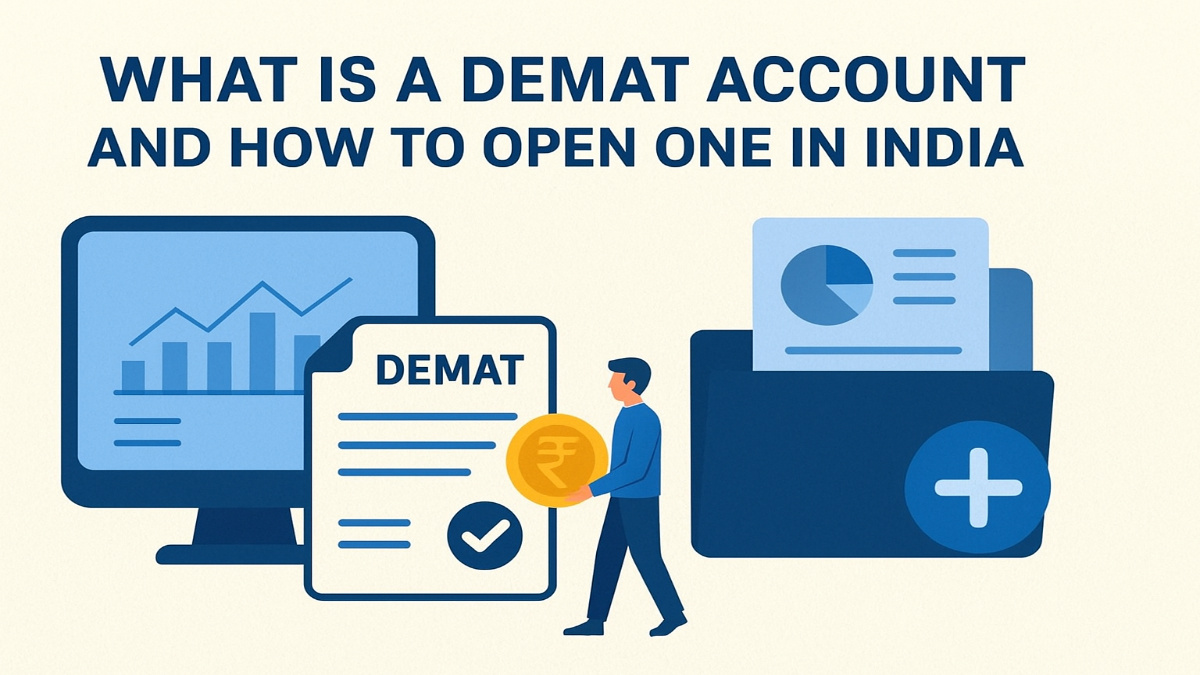
- Open a Demat Account: A demat account is required to hold ETFs and stocks. You can open one with brokers like Zerodha, Angel One, or 5paisa.
- Choose a Broker: Select a reputable broker that offers ETF trading. Many Indian brokers provide user-friendly platforms for beginners.
- Research ETFs: Look for ETFs that align with your goals. For beginners, broad-market ETFs like those tracking the Nifty 50 or Sensex are safe choices.
- Place an Order: Use your broker’s platform to buy ETF shares during market hours.
- Monitor Your Portfolio: Check your investments periodically and rebalance if needed to maintain your desired asset allocation.
Tips for Choosing the Right ETF
- Low Expense Ratio: Choose ETFs with low fees, as these reduce your overall costs. For example, many Nifty 50 ETFs have expense ratios below 0.1%.
- Low Tracking Error: This measures how closely the ETF follows its index. A lower tracking error (e.g., less than 2%) is better.
- High AUM: ETFs with higher Assets Under Management (AUM) are often more stable and liquid. For example, the SBI Nifty 50 ETF has a large AUM, making it a popular choice.
- Fund Objective: Ensure the ETF’s focus (e.g., equity, debt, or gold) matches your investment goals and risk tolerance.
When to Consider Stocks
While ETFs are great for beginners, stocks might be worth considering in certain situations:
- You Have Knowledge: If you’ve researched a company thoroughly and understand its business model, financials, and market position, stocks can be rewarding. For example, studying Reliance Industries’ growth in telecom and retail could make it a compelling choice.
- You Seek Higher Returns: Stocks can outperform ETFs if you pick winners, but this comes with higher risk.
- You Have Time to Manage: Stock investing requires monitoring market trends, company news, and financial reports, which demands time and effort.
Even experienced investors often use ETFs as the core of their portfolio for stability and add stocks to boost potential returns. For example, you might allocate 80% to a Nifty 50 ETF and 20% to stocks like TCS or HDFC Bank.
Tax Implications in India
Understanding taxes is crucial for maximizing your returns. Here’s how stocks and ETFs are taxed in India:
- Stocks:
- Short-Term Capital Gains (STCG): If held for less than 1 year, gains are taxed at 15%.
- Long-Term Capital Gains (LTCG): If held for more than 1 year, gains above ₹1 lakh are taxed at 10%.
- ETFs:
- Equity ETFs: Follow the same tax rules as stocks (15% STCG, 10% LTCG above ₹1 lakh).
- Debt ETFs: Interest income is taxed as per your income tax slab, which can be higher for those in higher tax brackets.
ETFs can sometimes be more tax-efficient due to their structure, as they generate fewer capital gains distributions compared to actively managed funds. Always consult a tax advisor for personalized advice.
Case Study: A Beginner’s Investment Journey
Let’s look at a hypothetical example to illustrate the difference:
Rohan’s Investment Choice
Rohan, a 25-year-old from Mumbai, has ₹1,00,000 to invest. He’s new to the stock market and wants to start safely.
- Option 1: Investing in an ETF
Rohan invests in the SBI Nifty 50 ETF, which tracks the Nifty 50 index. This gives him exposure to 50 top Indian companies, like Reliance, TCS, and HDFC Bank. If the Nifty 50 grows by 10% annually, his investment could grow to ₹1,10,000 in a year, with lower volatility due to diversification. - Option 2: Investing in Stocks
Rohan picks three stocks: Reliance Industries, Infosys, and Maruti Suzuki. If Reliance and Infosys perform well but Maruti struggles, his portfolio could be more volatile. He might see higher returns if all three stocks do well, but a single poor performer could drag down his returns.
Historically, broad-market ETFs like those tracking the Nifty 50 have provided steady growth with less risk, making them a safer choice for beginners like Rohan.
Combining ETFs and Stocks
Many investors find success by combining ETFs and stocks. For example:
- Core Portfolio (70-80%): Invest in ETFs for diversification and stability. A Nifty 50 ETF can form the backbone of your portfolio.
- Satellite Portfolio (20-30%): Add a few carefully selected stocks to boost potential returns. Research companies with strong fundamentals, like TCS or Bajaj Finance.
This approach balances risk and reward, allowing beginners to learn about stock picking while maintaining a stable base with ETFs.
Common Mistakes to Avoid
- Chasing Trends: Avoid investing in stocks or ETFs based on hype without understanding their fundamentals.
- Ignoring Fees: High expense ratios or frequent trading can eat into your returns.
- Lack of Patience: Investing is a long-term game. Don’t panic-sell during market dips.
- Overloading on Stocks: Beginners should avoid putting all their money into a few stocks, as this increases risk.
FAQ
What is the difference between ETFs and mutual funds?
Both pool money from investors to buy a portfolio of assets, but ETFs trade on stock exchanges like stocks, allowing you to buy and sell throughout the day. Mutual funds are bought or sold at the end of the trading day based on their net asset value (NAV).
Can I lose money in ETFs?
Yes, ETFs can lose value if the underlying assets perform poorly. However, their diversification reduces the risk compared to individual stocks.
Are ETFs better than stocks for long-term investing?
ETFs are often better for beginners due to lower risk and diversification. Stocks can offer higher returns but require more research and carry higher risk. A mix of both can work well for long-term goals.
How do I choose between different ETFs?
Look at the expense ratio, tracking error, AUM, and the fund’s objective. Choose ETFs that align with your risk tolerance and goals, like a Nifty 50 ETF for broad market exposure.
Can I invest in both ETFs and stocks?
Yes, many investors use ETFs for diversification and add stocks for higher return potential. Start with ETFs and gradually explore stocks as you gain experience.
What are some popular ETFs in India?
Popular ETFs include SBI Nifty 50 ETF, Nippon India ETF Nifty BeES, and Bharat Bond ETF. These offer exposure to equities, bonds, or gold.
How much money do I need to start investing in ETFs?
You can start with as little as the price of one ETF share plus brokerage fees. Some ETFs, like Nifty BeES, cost less than ₹200 per share.
Are ETFs tax-efficient?
Equity ETFs are taxed similarly to stocks, but their structure can make them slightly more tax-efficient due to fewer capital gains distributions.
Conclusion
When deciding between ETF vs Stock: Which Is Better for Beginners?, ETFs often come out ahead for those new to investing in India. They offer diversification, lower risk, and simplicity, making them an excellent starting point. Stocks, while offering higher return potential, require more time, research, and risk tolerance, which may suit you as you gain experience. A balanced approach—using ETFs as the core of your portfolio and adding stocks for growth—can be a smart strategy. Start early, stay informed, and align your investments with your financial goals. Happy investing!
Disclaimer: Moneyjack.in provides general financial information for educational purposes only. We are not financial advisors. Content is not personalized advice. Consult a qualified professional before making financial decisions. We are not liable for any losses or damages arising from the use of our content. Always conduct your own research.