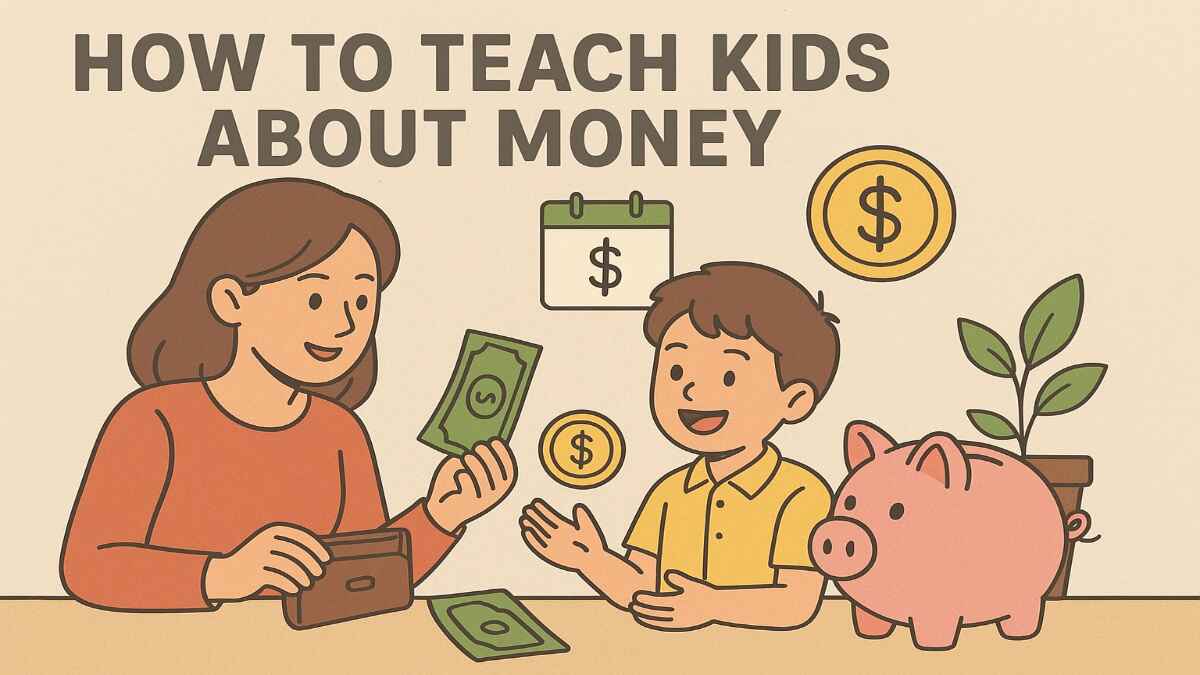
Teaching kids about money is one of the most important life skills you can pass on as a parent or guardian in India. In a country where financial habits are often learned through family traditions, understanding money early can help children grow into responsible adults. Whether it’s saving for Diwali gifts or understanding the value of hard-earned rupees, knowing how to teach kids about money sets them up for success. In this guide, we’ll explore practical ways to make money lessons fun and effective, tailored to Indian families.
As parents in bustling cities like Mumbai or quiet towns in Kerala, we all want our kids to be smart with money. But how do you start? How to teach kids about money isn’t just about lectures; it’s about real-life experiences. From pocket money to budgeting for school trips, these lessons build financial literacy step by step.
Table of Contents
Why It’s Important to Teach Kids About Money Early
In India, where the economy is growing fast but challenges like inflation and job competition exist, financial education is key. Kids who learn how to teach kids about money concepts from a young age are less likely to fall into debt traps later. According to experts, children as young as 5 can grasp basic ideas like saving and spending.
Think about it: In Indian households, money talks often revolve around festivals or family expenses. By teaching kids about money, you help them appreciate the effort behind earning. This prevents wasteful habits and encourages gratitude. How to teach kids about money starts with explaining why money matters – it’s not just paper; it’s security and freedom.
Parents often worry about overwhelming kids, but simple stories work wonders. Share tales from your childhood, like saving for a bicycle during summer vacations. This humanizes money, making it relatable in an Indian context where family bonds are strong.
Starting with the Basics: What Money Is and Where It Comes From
The first step in how to teach kids about money is demystifying it. Explain that money, like rupees, is a tool for exchanging goods. Use everyday examples: “Papa works at the office to earn money, which buys our groceries from the market.”
For younger kids, play games. Pretend to run a small shop at home with toys as items. Let them “buy” with play money. This teaches value without complexity. In India, where street vendors are common, take them to a local market and show how bargaining works – a fun way to introduce negotiation.
As they grow, discuss jobs. “Doctors help people and earn money; farmers grow food and sell it.” This ties into Indian diversity, from IT professionals in Bangalore to artisans in Rajasthan. How to teach kids about money here involves showing that money comes from effort, not magic.
Introducing Pocket Money: A Practical Tool
Pocket money is a cornerstone in how to teach kids about money. In India, many families give weekly allowances, starting from Rs. 50 for small kids. It teaches budgeting: “You have Rs. 100 this week; decide what to spend on.”
Set rules: Part for saving, part for spending, part for charity. This mirrors Indian values like ‘daan’ (giving). Use a piggy bank – or better, a ‘gullak’ – to make it cultural. Watch their excitement as coins clink in.
Track spending together. If they blow it on candies, discuss consequences gently. “Next time, save for that toy.” This builds decision-making. How to teach kids about money through pocket money fosters independence, crucial in a competitive society like ours.
Saving Habits: Building a Secure Future
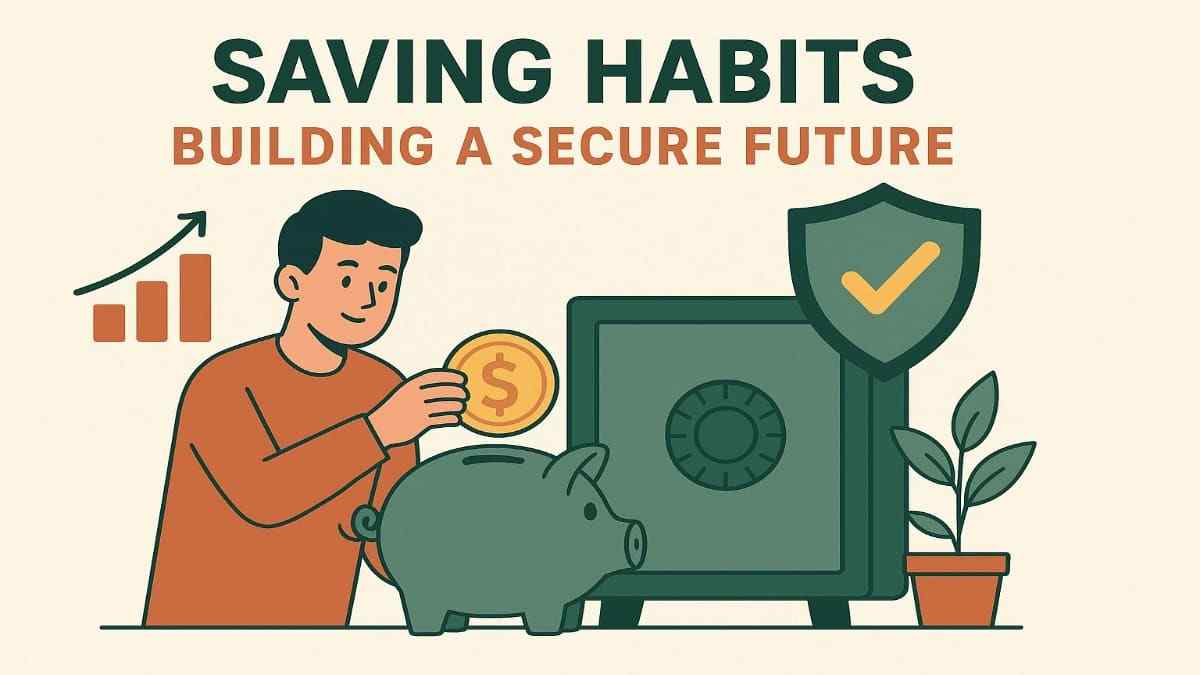
Saving is vital in how to teach kids about money. In India, with rising education costs, early saving habits pay off. Start with simple goals: Save for a new cricket bat or Holi colors.
Use visual aids like jars labeled ‘Save’, ‘Spend’, ‘Share’. Fill them weekly. For older kids, open a kid’s savings account at banks like SBI, which offer fun features. Explain interest: “Money grows like a plant if you don’t touch it.”
Share Indian stories, like how grandparents saved for weddings. This connects emotionally. How to teach kids about money saving prevents impulse buys, common with online shopping apps tempting kids today.
Encourage long-term thinking. “Save now for college.” In India, where family supports education, this reinforces responsibility.
Understanding Spending Wisely
Spending is the fun part of how to teach kids about money, but it needs wisdom. Teach needs vs. wants: “We need food, but a new video game is a want.”
In supermarkets, involve them in shopping. “Compare prices; choose the cheaper dal.” This is practical in Indian bazaars. Discuss ads: “That TV commercial makes toys look cool, but do you need it?”
Set budgets for outings, like Rs. 200 for a park visit. Let them manage it. If they overspend, no bailout – lesson learned. How to teach kids about money spending builds smart consumers in a market-driven India.
Earning Money: Chores and Small Jobs
To truly grasp how to teach kids about money, kids should earn it. Assign chores: Cleaning room for Rs. 10, helping with dishes for Rs. 20.
In Indian homes, where kids often help with festivals, tie earnings to tasks like decorating for Ganesh Chaturthi. This teaches work ethic.
For teens, suggest small jobs like tutoring neighbors or selling handmade crafts online. Platforms like Etsy suit Indian creativity. How to teach kids about money earning instills pride and value.
Warn about scams, common in digital India. “Never share bank details online.”
Budgeting Basics for Kids
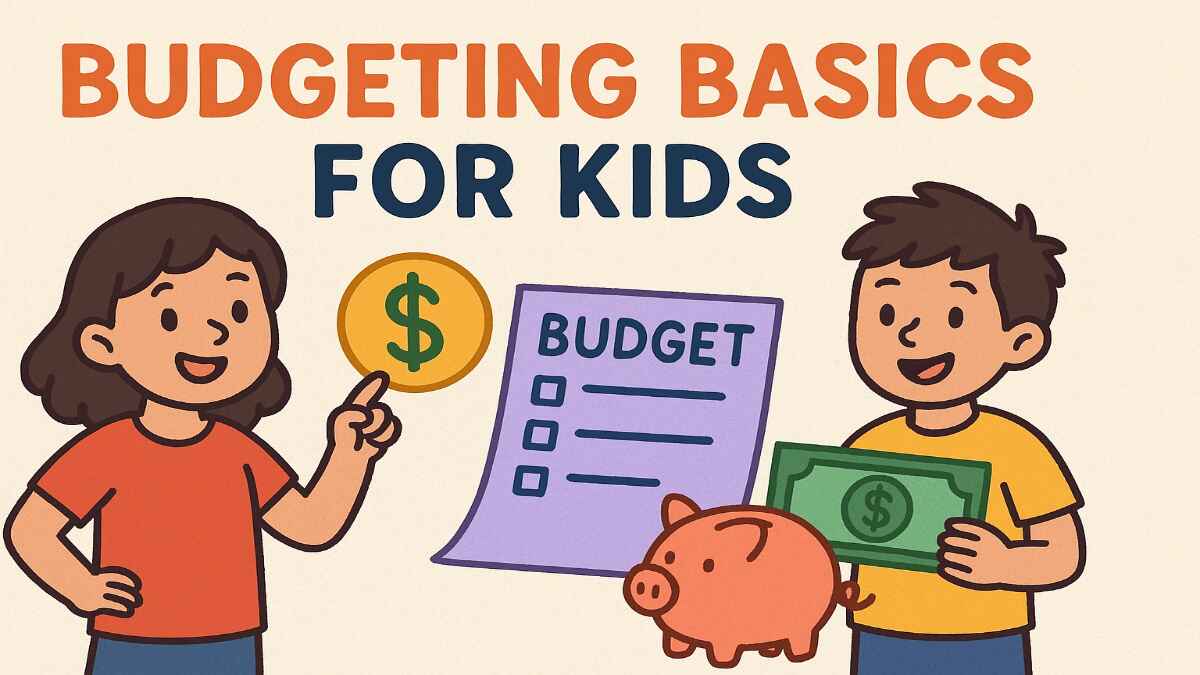
Budgeting is advanced in how to teach kids about money. Use simple plans: List income (pocket money), expenses (snacks, toys).
Apps like kid-friendly budgeting tools can help, but start with paper. “Plan your Rs. 500 monthly allowance.” Include savings goals.
In India, teach about family budgets: “We budget for rent, food, festivals.” This shows teamwork. How to teach kids about money budgeting prepares them for independent life.
Practice with role-play: “You’re planning a birthday party on Rs. 1000.”
Dealing with Debt and Loans
Debt is tricky in how to teach kids about money, but essential in India with easy loans. Explain simply: “Borrowing means promising to return more later.”
Use examples: “If you borrow Rs. 50 from me, repay Rs. 55 next week.” Discuss interest.
Warn about credit cards: “They’re convenient but can lead to trouble if not paid.” Share real stories anonymously.
How to teach kids about money debt encourages avoiding unnecessary borrowing, key in a growing economy.
Investing for the Future

Introduce investing lightly in how to teach kids about money. “Investing is making money work for you.”
Start with basics: Fixed deposits in Indian banks. For teens, explain stocks via apps like Groww, using small virtual amounts.
Use stories: “Investing in gold, like during Akshaya Tritiya.” This ties to culture.
How to teach kids about money investing builds wealth mindset, vital for India’s young population.
Charity and Giving Back
In India, giving is cultural. Include it in how to teach kids about money. “Share part of your savings with those in need.”
Participate in drives, like donating to orphanages during Eid or Christmas. This teaches empathy.
How to teach kids about money giving fosters balanced views – money isn’t just for self.
Digital Money and Online Safety
With UPI and apps, digital money is big in how to teach kids about money. Explain e-wallets: “Paytm lets you pay without cash.”
Teach safety: “Use strong passwords; don’t click suspicious links.”
Monitor their online spending. How to teach kids about money digitally prevents cyber issues in tech-savvy India.
Handling Peer Pressure and Money
Kids face pressure: “Everyone has that phone.” In how to teach kids about money, address this.
Role-play: “Say, ‘I can’t afford it now, but I’m saving.'” Build confidence.
In Indian schools, where uniforms level fields, emphasize inner worth. How to teach kids about money peer pressure helps resilience.
Money Lessons Through Games and Activities
Make how to teach kids about money fun with games. Board games like Monopoly, Indian version.
DIY: Create a family economy with points as money.
Storybooks on money, adapted to Indian tales. How to teach kids about money games engages without boredom.
Role of Schools and Community
Schools in India increasingly include financial literacy. Support it at home.
Join community workshops. How to teach kids about money community widens perspectives.
Common Mistakes to Avoid
Don’t give too much pocket money; it spoils. Be consistent.
Avoid using money as punishment. How to teach kids about money mistakes guide better parenting.
FAQ:-
What if my child doesn’t listen to money lessons?
Make it fun, not forceful. Use stories and games to engage.
Are there books on how to teach kids about money for Indian kids?
Yes, like “Rich Dad Poor Dad for Teens” or Indian books on financial fables.
How to handle kids wanting expensive gadgets?
Teach value: Save or earn part of it. Discuss alternatives.
Is investing safe for kids?
Start with bank accounts; consult experts for more.
What apps help in teaching kids about money?
Kid-friendly like Bankaroo or Indian banking apps’ junior sections.
Disclaimer: Moneyjack.in provides general financial information for educational purposes only. We are not financial advisors. Content is not personalized advice. Consult a qualified professional before making financial decisions. We are not liable for any losses or damages arising from the use of our content. Always conduct your own research.