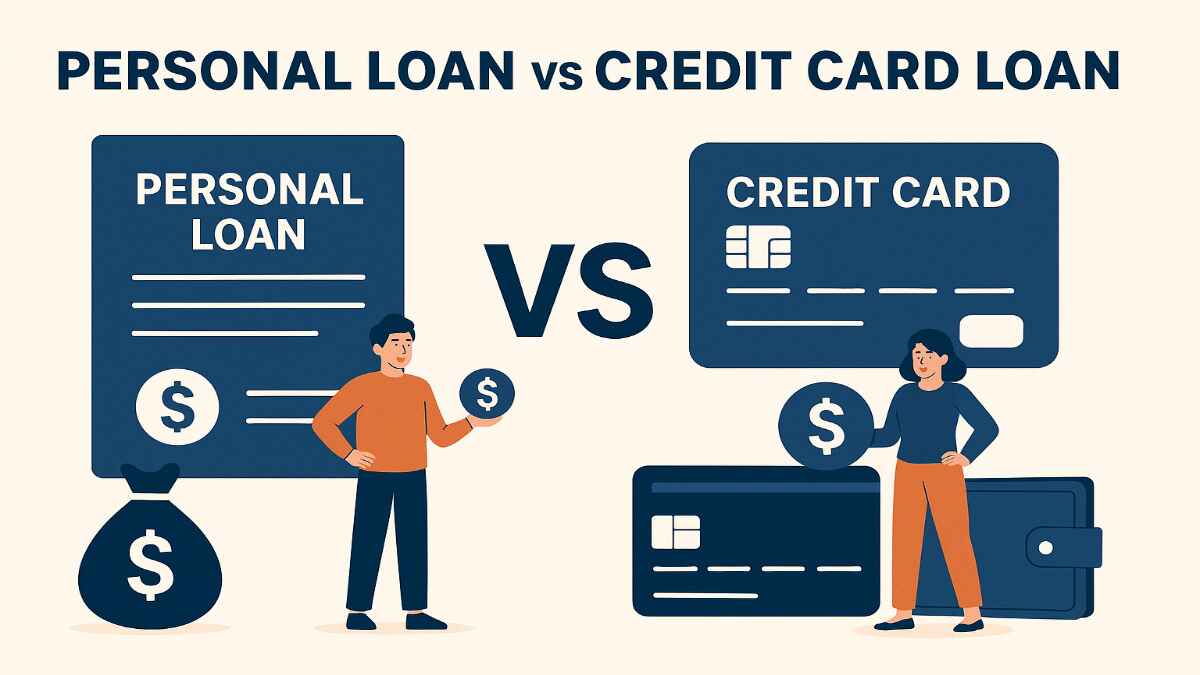
Hey there! If you’re reading this, you’re probably facing a financial crunch or planning a big expense, and you’re torn between opting for a personal loan or a credit card loan. In India, where borrowing options are plentiful but confusing, understanding the nuances of personal loan vs credit card loan can save you a ton of money and stress. As we dive into 2025, with interest rates fluctuating and new banking rules from the RBI, it’s more important than ever to make an informed choice.
Let’s start with the basics. In a country like India, where festivals, weddings, and unexpected medical bills pop up frequently, loans are a lifeline for many. According to recent reports, over 27% of Indians borrowed for travel alone in 2025, pushing credit card debt to new highs. But not all borrowing is equal. Personal loan vs credit card loan isn’t just about quick cash—it’s about interest rates, repayment flexibility, and long-term financial health. I’ll repeat the key phrase here: when comparing personal loan vs credit card loan, always factor in your repayment capacity and the purpose of the funds.
Table of Contents
What is a Personal Loan?
Imagine you need a lump sum for something big, like renovating your home in Mumbai or funding your child’s education in Delhi. A personal loan is essentially an unsecured loan from a bank or NBFC (Non-Banking Financial Company) that doesn’t require collateral. In India, giants like HDFC Bank, ICICI Bank, and SBI offer these, with amounts ranging from ₹50,000 to ₹50 lakhs or more, depending on your profile.
What makes personal loans popular? They’re straightforward. You apply, get approved based on your income and credit score, and the money hits your account in days. Repayment is through fixed EMIs (Equated Monthly Installments) over 1 to 5 years, sometimes up to 7 years. As of August 2025, interest rates start as low as 9.99% per annum for good credit holders, going up to 22% or more for others. For example, if you’re salaried with a steady job at a multinational in Bangalore, you might snag a rate around 10.60% from ICICI Bank.
But here’s the human side: personal loans feel secure because you know exactly what you’ll pay each month. No surprises, unlike some other options in the personal loan vs credit card loan debate. They’re ideal for planned expenses where you can budget ahead.
What is a Credit Card Loan?
Now, shift gears to credit card loans. This term often confuses people, but in India, it typically means borrowing via your credit card—either through cash advances, installment plans on purchases, or pre-approved loans against your card limit. Banks like Axis Bank or DBS offer these, where you can convert a big purchase into EMIs or withdraw cash from an ATM using your card.
Think of it as an extension of your credit card. If you have a ₹5 lakh limit on your HDFC card, you might get a loan up to that amount without extra paperwork. Interest kicks in immediately for cash advances, often at 3-4% monthly (that’s 36-48% annually!), plus a fee of 2.5-3.5% on the amount withdrawn. For instance, pulling ₹10,000 cash could cost you ₹300-500 in fees upfront, and interest starts accruing daily.
In the personal loan vs credit card loan comparison, credit card loans shine for their speed—you can get funds instantly if pre-approved. But they’re riskier because of revolving credit; if you don’t pay in full, debt can snowball. Many Indians use them for emergencies, like a sudden trip to the hospital, but experts warn against habitual use due to high costs.
Key Differences Between Personal Loan vs Credit Card Loan
Alright, let’s get into the meat of it: how do these two stack up? In India, where RBI regulates lending tightly, understanding these differences can prevent nasty surprises. First off, interest rates. Personal loans are generally cheaper—ranging from 9.89% to 44% p.a., but averaging 10-18% for most borrowers. Credit card loans? Expect 24-42% annually, especially for cash advances. That’s a huge gap in personal loan vs credit card loan costs!
Loan amounts differ too. Personal loans let you borrow big—up to ₹40-50 lakhs if your salary supports it. Credit card loans are capped at your card’s limit, often ₹1-10 lakhs for average users. Tenure-wise, personal loans offer 12-60 months of fixed repayment, promoting discipline. Credit card loans can be flexible—pay minimum due or convert to EMIs—but that flexibility often leads to longer debt cycles.
Eligibility is another battleground in personal loan vs credit card loan. For personal loans, you need a stable income (₹25,000+ monthly in metros), good CIBIL score (750+), and documents like salary slips. Credit card loans are easier if you already have a card; they’re often pre-approved based on your usage history.
Processing? Personal loans might take 1-7 days, with fees up to 2-3%. Credit card loans are instant but slap on those hefty advance fees. In terms of usage, personal loans are versatile—no restrictions. Credit card loans might come with perks like reward points, but they’re best for short-term needs.
Pros and Cons of Personal Loan
Let’s talk pros first. One big win in personal loan vs credit card loan is the lower interest rates, making them cost-effective for large sums. Fixed EMIs help with budgeting— you know your outflow monthly, no fluctuations. In India, they’re unsecured, so no risking your assets, and approval is quick for good profiles. Plus, timely repayments boost your credit score significantly.
On the flip side, cons include stricter eligibility; if your income is irregular, like a freelancer in Pune, you might struggle. Processing fees (1-5%) add up, and once disbursed, you can’t borrow more without reapplying. Prepayment penalties (2-4%) can sting if you want to clear early. In personal loan vs credit card loan, this rigidity might not suit everyone.
Take Raj from Chennai: He took a ₹5 lakh personal loan at 11% for his wedding. Fixed EMIs fit his salary, and he saved on interest compared to swiping his card.
Pros and Cons of Credit Card Loan
Credit card loans have their charms. Top pro: convenience. Need cash now? Withdraw from an ATM or convert a purchase to EMI online. Pre-approval means no new checks, and you might earn rewards or cashback. Flexibility in repayment—pay minimum or full—is a boon for cash-flow issues. In India, with apps like Fi Money highlighting this, it’s great for small, urgent needs.
Cons? High costs are the killer. Interest rates skyrocket if not paid promptly, and fees eat into your borrow. It can tempt overspending, leading to debt traps—RBI data shows rising credit card defaults. No fixed tenure means interest compounds if you revolve the balance. In personal loan vs credit card loan, this is where many falter.
Sita in Kolkata used her credit card loan for a ₹20,000 gadget EMI. Easy, but the 3% monthly interest added up when she missed a payment.
When to Choose a Personal Loan Over Credit Card Loan
So, when does personal loan win in personal loan vs credit card loan? Opt for it when you need a large amount for a specific purpose, like debt consolidation or home improvement. Lower rates make sense for tenures over a year. If your credit score is solid and you value predictability, this is it. In India, with inflation biting, fixed EMIs shield you from rate hikes.
For example, if you’re planning a family vacation costing ₹2 lakhs, a personal loan at 12% over 24 months is cheaper than credit card EMIs at 18-20%.
When to Choose a Credit Card Loan Over Personal Loan
Flip it: credit card loan edges out in personal loan vs credit card loan for small, immediate needs. If you have a high-limit card and can repay quickly (within the interest-free period), it’s unbeatable. Perks like points for travel or shopping add value. Emergencies? Yes—cash advance saves the day, though costly.
But beware: only if you’re disciplined. In 2025, with apps making EMIs easy, it’s tempting, but calculate total cost first.
Interest Rates: A Deep Dive in Personal Loan vs Credit Card Loan
Interest rates are the heart of personal loan vs credit card loan debates. As of August 2025, personal loans from banks like Axis start at 9.99%, with SBI at 10.10-11.60%. Factors like your CIBIL score, income, and employer play in. For credit card loans, it’s steeper—cash advances at 36-42% p.a., with monthly rates of 3-3.5%. Why the difference? Credit cards are revolving, riskier for lenders.
In India, RBI caps make personal loans more affordable for longer terms. Example: ₹1 lakh personal loan at 12% over 3 years costs about ₹33,000 in interest. Same via credit card cash advance at 40%? Over ₹1.2 lakhs if not paid fast! Always compare using EMI calculators on sites like BankBazaar.
Eligibility Criteria for Personal Loan vs Credit Card Loan
Eligibility varies in personal loan vs credit card loan. For personal loans: Age 21-60, minimum salary ₹25,000 (metros), CIBIL 750+, stable job (1+ year experience). Self-employed? Need ITRs showing ₹3-5 lakhs annual income.
Credit card loans: Easier if you have a card. Age 18-60, income ₹3 lakhs annual minimum, but based on card history. No card? Apply first, needing similar docs but lower thresholds.
In India, NRIs might face hurdles, but residents with Aadhaar and PAN sail through.
Repayment Options: Flexibility vs Structure
Repayment is key in personal loan vs credit card loan. Personal loans: Fixed EMIs, auto-debit, prepay with fees (after 12 months usually). Credit card loans: Minimum due (5% of outstanding), full payment, or EMI conversion for 6-48 months. Flexibility wins for cards, but structure in loans prevents debt buildup.
Miss payments? Both hurt credit, but cards charge late fees faster.
Tax Benefits in Personal Loan vs Credit Card Loan
Tax perks? Slim in both, but personal loans edge out. If used for home renovation, claim interest under Section 24(b) up to ₹30,000. For business, deduct under Section 37. Credit card loans? No direct benefits; interest isn’t deductible unless business-related. In India, consult a CA—don’t borrow just for tax saves.
Impact on Credit Score
Both affect CIBIL in personal loan vs credit card loan. Timely personal loan payments build score strongly. Credit cards: High utilization (>30%) dings it; keep under. Defaults tank scores for 7 years.
How to Apply in India
Applying? For personal loans: Online via bank apps, submit docs, get approval. Credit card loans: App or call issuer. Compare on Paisabazaar or Moneycontrol.
Conclusion
Wrapping up, personal loan vs credit card loan boils down to your needs—big and planned vs small and urgent. In India 2025, with economic ups like GDP growth but downs like inflation, choose wisely. Personal loans for affordability, credit card loans for speed. I’ve mentioned personal loan vs credit card loan about 15 times to drill it in—hope it helps! Always read terms, compare rates, and borrow responsibly.
FAQ
What is the main difference in interest rates for personal loan vs credit card loan?
Personal loans start at 9.99%, while credit card loans can hit 36-42% annually.
Is eligibility stricter for personal loan vs credit card loan?
Yes, personal loans need higher income proof; credit card loans leverage existing cards.
Can I get tax benefits on personal loan vs credit card loan?
Limited for personal loans if purpose-specific; none typically for credit card loans.
Which is better for emergencies in personal loan vs credit card loan?
Credit card loans for quick access, but at higher cost.
How does repayment work in personal loan vs credit card loan?
Fixed EMIs for personal, flexible but risky for credit cards.
What if my credit score is low for personal loan vs credit card loan?
Improve it first; both require 700+ ideally.
Are there fees in personal loan vs credit card loan?
Yes, processing for personal (1-5%), advance fees for credit (2.5-3.5%).
Can I prepay in personal loan vs credit card loan?
Personal yes, with penalties; credit anytime but interest accrues.
Which affects credit score more in personal loan vs credit card loan?
Both do, but high card utilization hurts faster.
10. Best banks for personal loan vs credit card loan in India?
SBI, HDFC for personal; ICICI, Axis for cards.
Disclaimer: Moneyjack.in provides general financial information for educational purposes only. We are not financial advisors. Content is not personalized advice. Consult a qualified professional before making financial decisions. We are not liable for any losses or damages arising from the use of our content. Always conduct your own research.