When we hear the term “investment,” we often think about stocks, mutual funds, or gold. But there is one investment tool that is known for being safe and reliable — government bonds. If you’re asking yourself, “What is a government bond?” — you’re not alone. Many people, especially in India, are becoming more curious about this steady form of investment.
So, let’s explore what is a government bond, how it works, why it matters, and whether you should invest in one.
Table of Contents
Introduction
To begin with, what is a government bond? In simple words, it is a loan that you give to the government. When a government needs money — for building roads, hospitals, schools, or paying off debt — it can borrow from the public. Instead of asking for donations, the government offers bonds, and when you buy a bond, you’re lending your money to the government. In return, the government promises to pay you back after a certain period, with interest.
Sounds safe, right? That’s because it usually is.
But we won’t stop there. This article will guide you step-by-step on what is a government bond, the different types, how they compare with other investments, how to invest in India, and their pros and cons.
Let’s begin your journey into this smart investing tool.
The Core Concept: What Is a Government Bond, Really?
To fully grasp what is a government bond, think of it like a fixed deposit — but instead of putting your money in a bank, you’re giving it to the government. The government then uses that money and pays you interest — just like a bank does.
The bond has a maturity date — this is when the government returns your money. The interest is called a “coupon” in bond terms, and it is usually paid once or twice a year.
So next time someone asks you, “What is a government bond?” — you can tell them: it’s a loan from you to the government, with fixed interest and safety.
Types of Government Bonds in India
Now that we understand what is a government bond, let’s break down the types available in India:
1. Treasury Bills (T-Bills)
These are short-term bonds with durations of 91 days, 182 days, and 364 days. They don’t pay regular interest — instead, they are issued at a discount and redeemed at full value.
2. Dated Government Securities (G-Secs)
These are long-term bonds, usually with maturities of 5 to 40 years. These bonds pay interest every six months.
3. Sovereign Gold Bonds (SGBs)
Issued by the RBI, these bonds are tied to the price of gold and are a good alternative to holding physical gold.
4. State Development Loans (SDLs)
Issued by state governments to fund their expenses.
Each of these helps answer the question, “What is a government bond?” in a unique way.
Why Does the Government Issue Bonds?
A great way to understand what is a government bond is by looking at its purpose. The government needs money to:
- Build infrastructure (roads, bridges, railways)
- Fund education and healthcare
- Meet budget deficits
- Pay interest on past loans
Instead of raising taxes or printing money (which can lead to inflation), the government borrows money through bonds.
Why Should You Care What a Government Bond Is?
If you’ve ever asked yourself, “Why should I care what is a government bond?” — here are a few strong reasons:
- Safety: Government bonds are backed by the Indian government, making them one of the safest investments.
- Regular Income: They offer fixed interest payments.
- Diversification: Adding bonds to your portfolio reduces risk.
- Tax Benefits: Certain bonds, like tax-free bonds, offer tax exemptions.
So yes, learning what is a government bond can help you become a smarter investor.
How Government Bonds Work in India
Let’s dig deeper into what is a government bond from a practical point of view. Here’s how they work in India:
- Issuance: The Reserve Bank of India (RBI) issues bonds on behalf of the government.
- Auction: These bonds are sold via auctions to banks, financial institutions, and individuals.
- Interest Payment: Interest (called coupon) is paid semi-annually or annually.
- Maturity: At maturity, the principal amount is returned to the investor.
If you’re wondering “What is a government bond in real action?” — this is it!
How to Buy Government Bonds in India
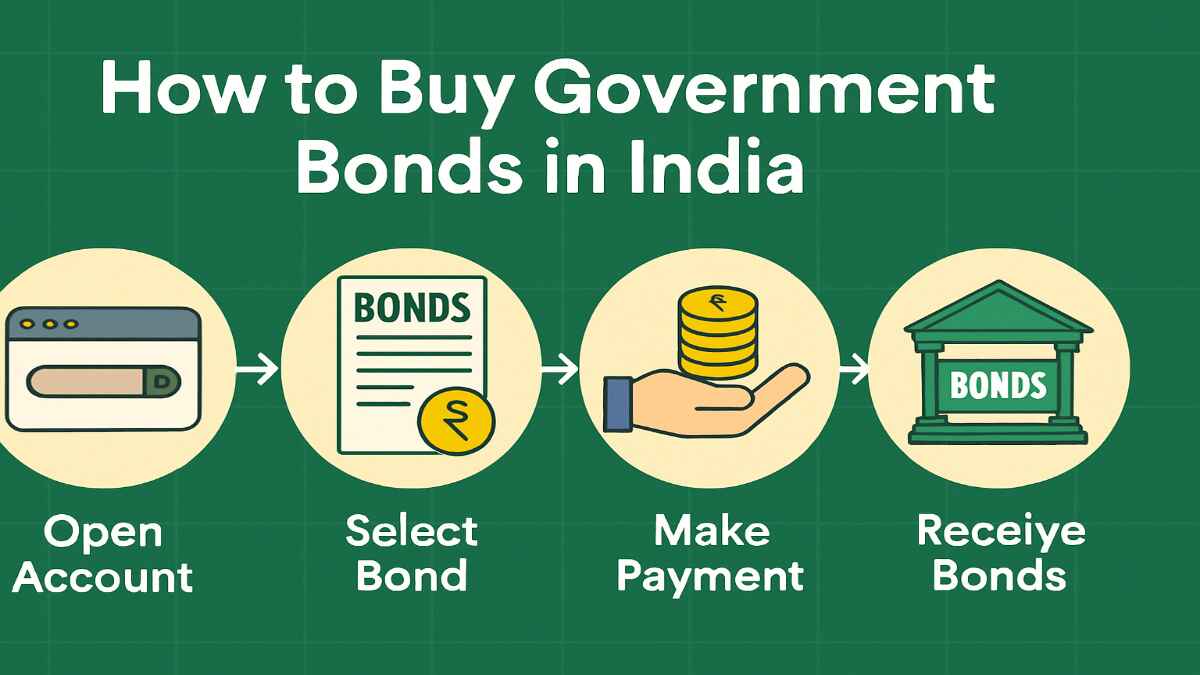
So you know what is a government bond — now how do you buy one?
Here are your options:
- RBI Retail Direct Portal: You can open an account directly and buy bonds without a broker.
- Stock Exchanges: Government securities are listed on NSE and BSE.
- Mutual Funds: You can invest in government bond mutual funds.
- Banks and Brokers: Many financial intermediaries help retail investors buy bonds.
All of these platforms are great for investors who now understand what is a government bond and want to add it to their portfolio.
Who Should Invest in Government Bonds?
You might now ask yourself — now that I know what is a government bond, should I invest in it?
Here’s who benefits most:
- Senior citizens seeking regular income
- Risk-averse investors looking for safety
- Beginners who want to start slow and steady
- Long-term investors aiming to diversify
Advantages of Government Bonds
Let’s look at the good side of what is a government bond:
- Low Risk: Backed by the Indian government
- Predictable Returns: Fixed interest payments
- Tax Savings: Some bonds offer tax exemptions
- Support National Development: Your money helps build the nation
Disadvantages of Government Bonds
Of course, no investment is perfect. While knowing what is a government bond is empowering, here are a few downsides:
- Lower Returns: Compared to equities
- Long Lock-in Period: Some bonds can be held for 10–20 years
- Market Risk: Interest rates affect bond prices
- Liquidity: Not all bonds are easy to sell
Real-Life Example of What Is a Government Bond
Let’s take a real example to understand what is a government bond in action:
Imagine you buy a 10-year G-Sec bond worth ₹1,00,000 with a 7% interest rate. Every year, you’ll earn ₹7,000 as interest (₹3,500 every 6 months). After 10 years, you get your ₹1,00,000 back.
It’s simple, steady, and secure.
Common Myths About Government Bonds
Many people misunderstand what is a government bond. Let’s clear up some myths:
- Myth: Only rich people can invest in bonds
Fact: Anyone can start with small amounts via RBI Retail Direct. - Myth: Bonds don’t earn much
Fact: Some long-term bonds offer returns that beat inflation. - Myth: Bonds are too complicated
Fact: Once you understand what is a government bond, it’s actually quite easy.
Government Bonds vs Other Investments
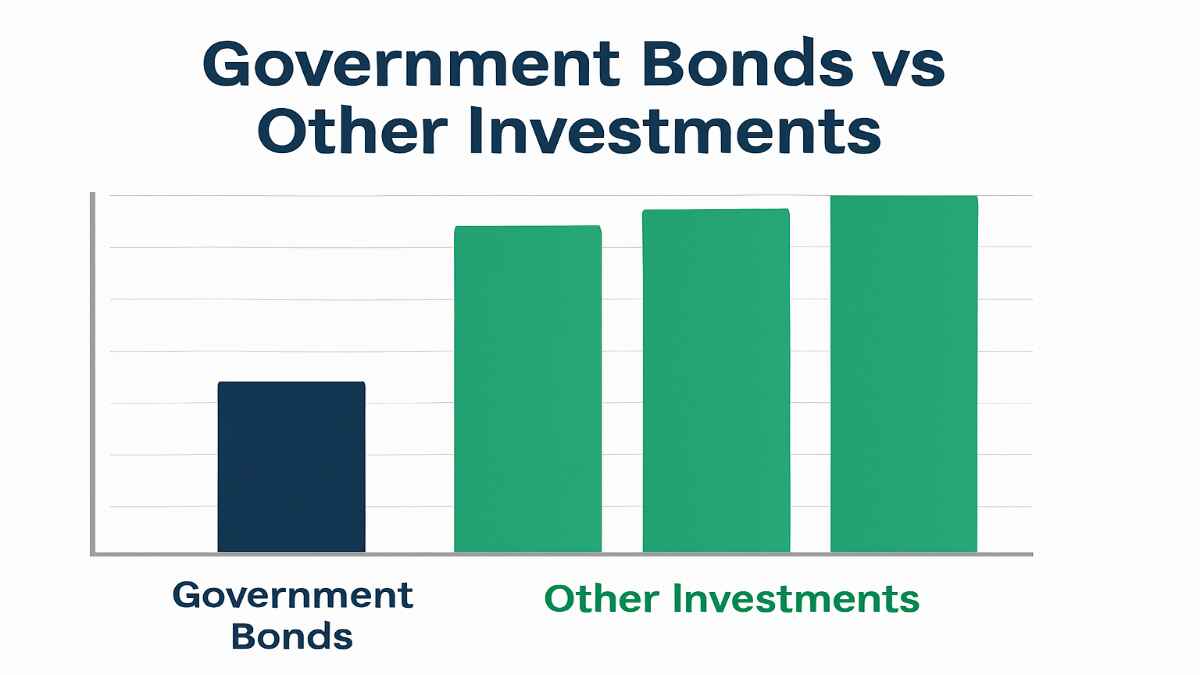
If you’re comparing what is a government bond with other investment types:
- vs Fixed Deposits: Bonds may offer better interest rates.
- vs Stocks: Stocks offer higher returns but come with higher risk.
- vs Mutual Funds: Bond funds carry market risks, unlike direct bonds.
- vs Gold: Bonds like SGBs provide gold exposure with interest.
The Future of Government Bonds in India
With more people learning what is a government bond, and with tools like RBI Retail Direct, the future looks promising:
- Retail participation is growing.
- Bonds may be linked to digital wallets.
- More tax-saving options could be introduced.
This is just the beginning of a bond-friendly India.
Final Thoughts: What Is a Government Bond?
So after all this, let’s summarize once again: What is a government bond?
It is a secure, government-backed way to invest your money. You lend money to the government, they pay you interest, and you get your money back at the end of the term.
Whether you’re a beginner, a senior citizen, or someone looking for low-risk options — knowing what is a government bond can make your financial life better.
It’s not about quick profits. It’s about peace of mind and financial discipline.
FAQs
What is a government bond in simple terms?
A government bond is a loan you give to the government, and in return, they pay you interest over time and return your money at maturity.
Are government bonds safe?
Yes, government bonds are considered one of the safest investment options, especially in India.
How can I invest in government bonds?
You can invest via the RBI Retail Direct Portal, stock exchanges, or through mutual funds and banks.
Do government bonds give monthly income?
Most government bonds offer interest every 6 months, but some schemes provide monthly income options.
Are government bonds tax-free?
Some bonds, like tax-free bonds, offer tax benefits. Others may be taxable depending on the scheme.
Can I sell my bond before maturity?
Yes, some government bonds can be traded in the secondary market, but it depends on the bond’s liquidity.
What is the interest rate on government bonds?
It varies but usually ranges between 6% and 8% depending on the bond type and tenure.
Is it better to invest in FD or government bonds?
FDs are easier to understand, but bonds often give better returns over longer periods with similar safety.
How long is the maturity period for government bonds?
It can range from a few months (like T-Bills) to 40 years (like long-term G-Secs).
Do I need a Demat account to buy government bonds?
Not always. Through RBI Retail Direct, you can invest without a Demat account.
Disclaimer: Moneyjack.in provides general financial information for educational purposes only. We are not financial advisors. Content is not personalized advice. Consult a qualified professional before making financial decisions. We are not liable for any losses or damages arising from the use of our content. Always conduct your own research.