Introduction
Owning a vehicle in India, whether it’s a car or a two-wheeler, comes with responsibilities, one of which is ensuring you have the right insurance coverage. While insurance protects you from financial losses due to accidents or damages, there’s a lesser-known feature that can make your policy even more rewarding: the No Claim Bonus (NCB). If you’ve ever wondered, “What is a No Claim Bonus (NCB)?” this guide is for you.
In simple English, we’ll explore what NCB is, how it works, its benefits, and how you can maximize it to save money on your insurance premiums. Tailored for Indian vehicle owners, this article is designed to be your go-to resource for understanding NCB in a human, relatable way.”What Is a No Claim Bonus NCB”
Table of Contents
What Is a No Claim Bonus (NCB)?
No Claim Bonus (NCB) is a discount offered by insurance companies to policyholders who do not file any claims during their policy term. It’s a way to reward safe drivers and responsible vehicle owners. In India, NCB is primarily associated with comprehensive motor insurance policies, which cover both third-party liabilities and damages to your own vehicle (known as own-damage coverage). The more years you go without making a claim, the higher the discount you receive on your renewal premium.
Key Features of NCB
- Discount on Premium: NCB reduces the own-damage portion of your insurance premium.
- Cumulative Benefit: The discount increases with each claim-free year, up to a maximum of 50%.
- Tied to the Policyholder: NCB is linked to you, not your vehicle, so you can transfer it to a new car or insurer.
- Reset on Claim: If you file a claim, your NCB resets to zero, and you lose the discount.
For example, if you have a comprehensive car insurance policy and don’t make any claims in the first year, you’ll earn a 20% discount on your renewal premium. If you continue to drive safely, this discount grows over time, making your insurance more affordable.
How Does NCB Work?
Understanding how NCB works is key to making the most of it. Here’s a step-by-step explanation:
- First Policy Year: When you purchase a comprehensive insurance policy, you don’t have any NCB yet because you haven’t completed a full year without claims.
- Second Year Onward: If you don’t file a claim during the first year, you earn a 20% NCB discount on your renewal premium. This discount applies only to the own-damage component of your premium, not the third-party liability portion.
- Increasing Discounts: For each consecutive claim-free year, the NCB percentage increases, as shown in the table below:
| Claim-Free Years | NCB Discount |
|---|---|
| 1 | 20% |
| 2 | 25% |
| 3 | 35% |
| 4 | 45% |
| 5 and above | 50% |
- Reset on Claim: If you file a claim at any point, your NCB resets to 0%, and you’ll need to start building it again from the first claim-free year.
- Transferability: NCB is tied to the policyholder, not the vehicle. So, if you sell your car and buy a new one, you can transfer your NCB to the new vehicle’s policy. You can also transfer it to a new insurer by providing an NCB certificate from your previous insurer.
Example of NCB in Action
Let’s say your car insurance premium for own-damage coverage is ₹15,000. Here’s how NCB would affect your renewal premium over the years, assuming no claims:
- Year 1: No NCB, so you pay ₹15,000.
- Year 2: 20% NCB = ₹3,000 discount, so you pay ₹12,000.
- Year 3: 25% NCB = ₹3,750 discount, so you pay ₹11,250.
- Year 4: 35% NCB = ₹5,250 discount, so you pay ₹9,750.
- Year 5: 45% NCB = ₹6,750 discount, so you pay ₹8,250.
- Year 6: 50% NCB = ₹7,500 discount, so you pay ₹7,500.
If you file a claim in Year 4, your NCB resets to 0%, and in Year 5, you’d pay the full ₹15,000 again. This example shows how NCB can lead to significant savings over time.
NCB in Different Types of Insurance
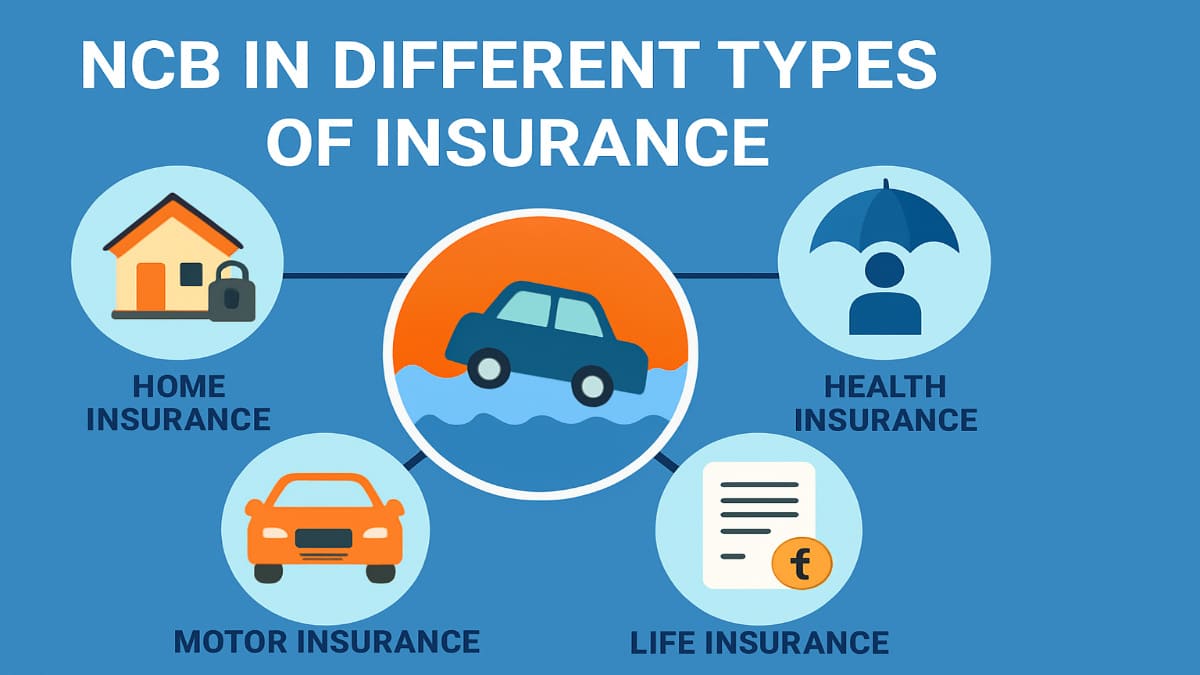
While NCB is most commonly associated with motor insurance (for cars and two-wheelers), it’s also available in some health insurance policies. Let’s break it down:
NCB in Car Insurance
In car insurance, NCB is a standard feature of comprehensive policies. It applies to the own-damage premium, which covers repairs to your vehicle due to accidents, theft, or natural calamities. The discount structure is as outlined above, starting at 20% and reaching 50% after five claim-free years.
- Key Consideration: NCB does not apply to third-party liability insurance, which is mandatory in India under the Motor Vehicles Act, 1988. Third-party premiums are fixed by the Insurance Regulatory and Development Authority of India (IRDAI) and are not eligible for NCB discounts.
NCB in Two-Wheeler Insurance
NCB works similarly for two-wheeler insurance. If you own a bike or scooter and have a comprehensive policy, you can earn NCB for each claim-free year. The discount percentages are the same as for car insurance (20% to 50%). Given the high number of two-wheelers on Indian roads, NCB is a great way for bike owners to save on insurance costs.
NCB in Health Insurance
Some health insurance policies in India offer NCB, but it works differently. Instead of a premium discount, health insurance NCB often increases your sum insured (the amount of coverage) for each claim-free year. For example, if your policy has a sum insured of ₹5 lakh and you don’t make a claim, the insurer might increase it to ₹6 lakh the next year at no extra cost. Alternatively, some plans offer a premium discount similar to motor insurance.
- Note: Not all health insurance policies offer NCB, so check the policy terms carefully before purchasing.
Benefits of No Claim Bonus (NCB)
NCB offers several advantages that make it a valuable feature for policyholders:
- Significant Savings:
- With discounts ranging from 20% to 50%, NCB can drastically reduce your insurance costs. For example, a 50% NCB on a ₹20,000 own-damage premium saves you ₹10,000 annually.
- Encourages Safe Driving:
- The prospect of losing your NCB motivates you to drive carefully, avoid accidents, and maintain your vehicle properly. This not only saves money but also promotes road safety.
- Transferability:
- Since NCB is linked to the policyholder, you can transfer it to a new vehicle or insurer. This is especially useful if you upgrade to a new car or switch insurance providers for better coverage or rates.
- Long-Term Reward:
- The cumulative nature of NCB means the longer you go without claims, the more you save. This makes it a rewarding feature for disciplined drivers.
- Incentive for Minor Repairs:
- For small damages, like a minor dent or scratch, you might choose to pay for repairs out of pocket to preserve your NCB, which can be more cost-effective in the long run.
When Is NCB Applicable?
NCB is not a universal feature and has specific conditions:
- Comprehensive Policies Only: NCB applies to comprehensive motor insurance policies that include own-damage coverage. It does not apply to standalone third-party liability policies.
- Timely Renewal: To retain your NCB, you must renew your policy before it expires. Most insurers allow a grace period of 90 days after expiry, but failing to renew within this period may result in losing your NCB.
- Forfeiture on Claim: Any claim, even a minor one, resets your NCB to zero unless you have an NCB protection add-on.
- Not Applicable to Third-Party Claims: If you file a claim for third-party damages (e.g., damage to someone else’s property), it doesn’t affect your NCB, as NCB only applies to own-damage claims.
How to Retain Your NCB
Retaining your NCB requires careful planning and discipline. Here are some practical tips:
- Avoid Claims for Minor Damages:
- If your vehicle sustains minor damage, like a small dent or scratch, consider paying for repairs yourself. Filing a claim for small amounts could cost you more in the long run by resetting your NCB.
- Renew on Time:
- Ensure your policy is renewed before it expires. A lapse in coverage could lead to losing your NCB. Set reminders or opt for auto-renewal options offered by some insurers.
- Drive Safely:
- Follow traffic rules, avoid rash driving, and maintain your vehicle regularly to minimize the chances of accidents or damages that might lead to a claim.
- Opt for NCB Protection:
- If you’re worried about losing your NCB due to an unavoidable claim, consider purchasing an NCB protection add-on (explained below).
- Check Policy Terms:
- Before filing a claim, review how it will affect your NCB. Some insurers may have specific conditions, so understanding your policy is crucial.
NCB Protection Add-on
The NCB protection add-on is a feature offered by some insurance companies to safeguard your NCB even if you make a claim. Here’s how it works:
- Functionality: With this add-on, you can file one claim (up to a specified limit, typically ₹2,000–₹5,000, depending on the insurer) without losing your NCB. For example, if you have a 50% NCB and make a claim covered by this add-on, your NCB remains at 50% for the next renewal.
- Cost: The add-on comes at an additional premium, but it’s often worth it for policyholders with high NCB percentages.
- Availability: Not all insurers offer NCB protection, so check with your provider when purchasing or renewing your policy.
Example Scenario
Suppose you have a 45% NCB, and your car sustains damage worth ₹3,000. Without NCB protection, filing a claim would reset your NCB to 0%, costing you a ₹6,750 discount (on a ₹15,000 premium) the next year. With NCB protection, you can claim the ₹3,000 and still retain your 45% NCB, saving you money in the long run.
Real-Life Scenarios
To make NCB more relatable, let’s look at a few scenarios:
- The Cautious Driver:
- Priya, a school teacher in Mumbai, has driven her car for four years without any claims. She enjoys a 45% NCB, reducing her ₹12,000 own-damage premium to ₹6,600. When her car gets a minor scratch, she pays ₹1,500 for repairs herself to preserve her NCB, saving ₹5,400 on her next renewal.
- The New Car Buyer:
- Raj, a software engineer in Bangalore, sells his old car and buys a new one. He transfers his 35% NCB to the new car’s policy, reducing his premium from ₹20,000 to ₹13,000. By providing an NCB certificate from his previous insurer, he ensures his savings carry over.
- The Claim Dilemma:
- Ankit, a businessman in Delhi, has a 50% NCB but faces a ₹4,000 repair bill after a minor accident. His insurer offers NCB protection, so he files the claim without losing his discount, keeping his premium at ₹8,000 instead of ₹16,000.
These scenarios show how NCB can impact your insurance costs and decision-making.
NCB and Indian Road Conditions
India’s roads can be unpredictable, with heavy traffic, potholes, and varying driving habits. According to the Ministry of Road Transport and Highways, India reported over 4.6 lakh road accidents in 2022, highlighting the importance of insurance. NCB serves as an incentive to navigate these challenges safely. By avoiding claims, you not only save money but also contribute to safer roads.
Common Misconceptions About NCB
There are a few myths about NCB that can confuse policyholders:
- Myth 1: NCB Applies to All Insurance Policies:
- Fact: NCB is only for comprehensive motor insurance and some health insurance policies, not third-party policies.
- Myth 2: NCB Can Be Shared Across Vehicles:
- Fact: NCB is specific to one vehicle and policyholder. If you own multiple vehicles, each needs its own claim-free record to earn NCB.
- Myth 3: NCB Is Lost Forever After a Claim:
- Fact: While a claim resets your NCB to zero, you can start earning it again with each claim-free year. Additionally, NCB protection can prevent this loss.
FAQs
What is the maximum NCB I can get?
The maximum NCB discount is 50%, achievable after five consecutive claim-free years.
Can I transfer my NCB to a new car?
Yes, NCB is linked to the policyholder, so you can transfer it to a new vehicle by providing an NCB certificate to your insurer.
What happens if I make a claim after earning NCB?
Filing a claim resets your NCB to 0%, and you’ll lose the discount on your next renewal unless you have NCB protection.
Is NCB applicable for third-party insurance?
No, NCB applies only to the own-damage component of comprehensive insurance policies.
How can I protect my NCB if I need to make a claim?
You can purchase an NCB protection add-on, which allows you to make a claim (up to a certain limit) without losing your NCB.
Can I get NCB on my first policy renewal?
No, NCB starts from the second year after you complete one full claim-free year.
Does NCB apply to two-wheeler insurance?
Yes, NCB works the same way for comprehensive two-wheeler insurance as it does for car insurance.
What if I switch insurers?
You can transfer your NCB to a new insurer by submitting an NCB certificate from your previous insurer.
Is NCB available in health insurance?
Some health insurance policies offer NCB, either as a premium discount or an increased sum insured for claim-free years.
What happens if I don’t renew my policy on time?
If you fail to renew within 90 days of expiry, you may lose your NCB. Always renew on time to retain it.
Tips for Maximizing NCB
To make the most of your NCB, consider these strategies:
- Compare Insurers: Some insurers offer better NCB terms or additional benefits like NCB protection. Compare policies on platforms like Policybazaar or Acko.
- Maintain Your Vehicle: Regular maintenance reduces the likelihood of breakdowns or damages that might lead to claims.
- Understand Policy Terms: Read your policy documents to know exactly how NCB works and what conditions apply.
- Use NCB Calculators: Many insurers, like Go Digit, provide online NCB calculators to estimate your savings.
Conclusion
No Claim Bonus (NCB) is a fantastic feature that rewards you for being a safe and responsible driver. By understanding how NCB works, you can make informed decisions about when to file a claim, how to retain your discount, and how to transfer it when needed. In India, where insurance is mandatory and road conditions can be challenging, NCB is a valuable tool to make your insurance more affordable. Whether you drive a car, ride a two-wheeler, or even have a health insurance policy, leveraging NCB can lead to significant savings and peace of mind. So, drive safely, renew on time, and watch your NCB grow!
Disclaimer: Moneyjack.in provides general financial information for educational purposes only. We are not financial advisors. Content is not personalized advice. Consult a qualified professional before making financial decisions. We are not liable for any losses or damages arising from the use of our content. Always conduct your own research.