Hey there! If you’re dipping your toes into the world of investments, especially in India where saving smart is almost a national pastime, you’ve probably heard terms like bonds, stocks, and mutual funds thrown around. But what about zero coupon bonds? They sound a bit mysterious, right? Like a bond that’s on a diet and skipped all the coupons. Well, don’t worry—I’m here to break it down for you in simple English. In this article, we’ll explore what a zero coupon bond really is, how it works, why it’s popular (or not), and everything else you need to know to decide if it’s right for your portfolio.”What Is a Zero Coupon Bond”
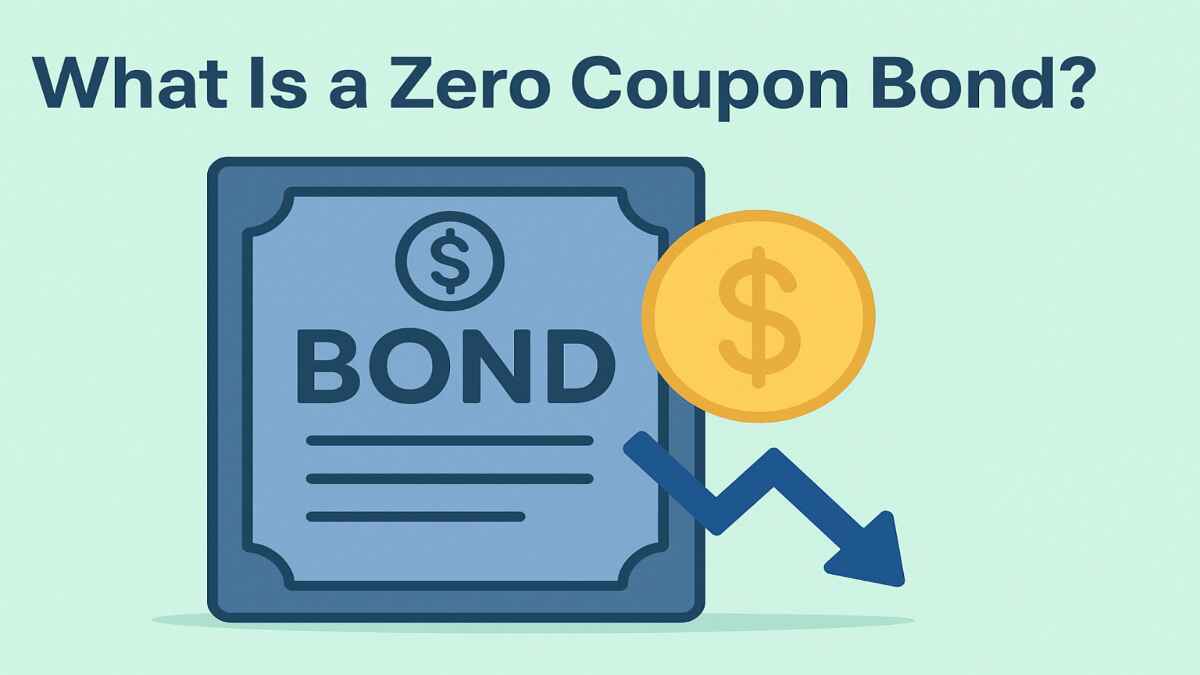
Let’s start with the basics. A zero coupon bond is a type of debt security that doesn’t pay any interest during its lifetime. Instead, it’s sold at a deep discount to its face value, and when it matures, you get the full face value back. The difference between what you paid and what you get at the end? That’s your profit—essentially, the interest earned over time, but all in one lump sum at maturity.
Imagine this: You buy a zero coupon bond for ₹800 today, but its face value is ₹1,000, and it matures in 5 years. No monthly or yearly interest payments come your way. But after 5 years, boom—you receive ₹1,000. That ₹200 difference is your gain, compounded over the years. It’s like planting a seed and waiting for the tree to grow fully before harvesting the fruit.
Now, why call it “zero coupon”? In the bond world, “coupons” refer to the interest payments. Regular bonds pay these coupons periodically, say every six months. Zero coupon bonds have zero of those, hence the name. They’re also known as discount bonds or deep discount bonds in some circles.
Table of Contents
The History Behind Zero Coupon Bonds
To understand zero coupon bonds better, let’s take a quick trip down memory lane. These instruments aren’t new—they’ve been around since the 1960s in the US, popularized by the Treasury Department with their STRIPS (Separate Trading of Registered Interest and Principal of Securities) program. But in India, they gained traction in the 1990s when the government and corporations started issuing them to raise funds without the hassle of periodic interest payouts.
In India, the Reserve Bank of India (RBI) plays a big role in regulating bonds. Zero coupon bonds were introduced as a way for the government to finance long-term projects, like infrastructure or deficit funding, without straining cash flows yearly. Remember the economic liberalization in 1991? That era saw a boom in such innovative financial tools. Today, entities like the Government of India, public sector undertakings (PSUs) like NABARD or REC, and even some private companies issue them.
Fun fact: In the early 2000s, zero coupon bonds became a hit among Indian investors looking for tax-efficient ways to save for goals like children’s education or retirement. They’re not as flashy as stocks, but they offer predictability in an unpredictable market.
How Do Zero Coupon Bonds Work?
Alright, let’s get into the nuts and bolts. When you buy a zero coupon bond, you’re essentially lending money to the issuer (government, company, or bank) at a discount. The issuer promises to pay back the face value (also called par value) on a specific maturity date.
The key here is the discount. The price you pay is calculated using something called the yield to maturity (YTM). YTM is basically the rate of return you can expect if you hold the bond till the end. It’s influenced by factors like prevailing interest rates, time to maturity, and the issuer’s creditworthiness.
For example, if interest rates are high, zero coupon bonds might be sold at a steeper discount to make them attractive. Conversely, in a low-interest environment—like what we’ve seen in India post-COVID—the discount might be smaller.
Mathematically, the price of a zero coupon bond is found using the formula:
Price = Face Value / (1 + r)^n
Where:
- r is the yield (interest rate) per period
- n is the number of periods until maturity
Don’t worry if math isn’t your thing; most investors use apps or financial calculators for this. In India, platforms like NSE or BSE provide tools to check current prices.
Once you buy it, you just hold on. No coupons mean no reinvestment hassle. At maturity, the issuer redeems it at face value, and you pocket the difference as your return.
But here’s a twist: Even though no interest is paid annually, for tax purposes in India, the implied interest (the discount) is considered income and taxed yearly under “Income from Other Sources.” More on taxation later.
Types of Zero Coupon Bonds in India
Zero coupon bonds aren’t one-size-fits-all. In India, you’ll find a few varieties:
- Government Zero Coupon Bonds: Issued by the central government through the RBI. These are super safe, backed by sovereign guarantee. Examples include Treasury Bills (T-Bills) for short terms, but longer ones like Government Securities (G-Secs) can be stripped into zero coupons.
- Corporate Zero Coupon Bonds: Issued by companies to raise capital. These carry higher risk (and higher yields) because if the company defaults, you’re in trouble. Think of bonds from firms like Tata or Reliance, though not all are zero coupon.
- Municipal Zero Coupon Bonds: Less common, but some local bodies issue them for projects like roads or water supply.
- Convertible Zero Coupon Bonds: Rare in India, but these can convert into equity shares at maturity, adding a stock-like flavor.
- STRIPS in India: Similar to the US, the RBI allows stripping of coupons from regular bonds to create zero coupon versions.
Choosing the type depends on your risk appetite. For conservative Indian investors, government ones are a no-brainer.
Advantages of Investing in Zero Coupon Bonds
Why bother with zero coupon bonds when regular bonds pay interest regularly? Here are some perks:
- Predictable Returns: You know exactly what you’ll get at maturity. No market fluctuations in interest payments.
- No Reinvestment Risk: With regular bonds, you have to reinvest coupons, and if rates fall, your overall return dips. Zero coupons avoid that.
- Long-Term Goal Alignment: Perfect for Indians saving for big events like weddings or home down payments. Buy one that matures when you need the money.
- Discount Pricing: Buying at a discount feels like a bargain, and the compounding is built-in.
- Liquidity: In India, you can sell them on secondary markets like NSE before maturity, though prices fluctuate with interest rates.
For retirees in India, they offer a way to lock in funds without worrying about monthly income streams.
Disadvantages to Watch Out For
Nothing’s perfect, right? Zero coupon bonds have downsides:
- No Regular Income: If you need cash flow, like pensioners, this isn’t ideal. All returns come at the end.
- Interest Rate Sensitivity: If rates rise after you buy, the bond’s market value falls sharply because newer bonds offer better yields.
- Inflation Risk: Over long terms (10-20 years), inflation can erode the purchasing power of your lump sum.
- Taxation Hit: In India, the accrued interest is taxed annually, even if you don’t receive it. This can be a cash flow issue.
- Credit Risk: For non-government bonds, default is possible, though rare for top-rated ones.
- Opportunity Cost: Money locked in might miss out on higher returns from stocks or mutual funds.
Weigh these against your financial situation. If you’re young and aggressive, maybe mix them with equities.
Zero Coupon Bonds in the Indian Context
India’s bond market is growing fast, thanks to initiatives like Bharat Bond ETF, which includes zero coupon elements. The RBI’s retail direct scheme lets ordinary folks buy G-Secs directly, including zeros.
Post-2020, with stock market volatility, many Indians turned to bonds. According to RBI data, bond issuances hit record highs in 2023. For NRIs, zero coupons are attractive for rupee-denominated savings.
Tax reforms under the new regime have made them less appealing for some, but they’re still popular for tax-saving under Section 80C indirectly through certain instruments.
Compare this to fixed deposits (FDs): FDs pay interest regularly and are taxed similarly, but zeros offer potentially higher yields if held long.
Taxation on Zero Coupon Bonds in India
Taxes can make or break an investment. For zero coupon bonds:
- The discount is treated as interest income.
- Taxed annually on accrual basis at your slab rate (up to 30% plus surcharge).
- If held till maturity, long-term capital gains (over 3 years) apply at 20% with indexation.
- For listed bonds, LTCG is 10% without indexation or 20% with.
- TDS might apply on redemption for corporates.
Consult a CA for personalized advice, especially with Budget 2024 changes.
Comparing Zero Coupon Bonds with Other Investments
Let’s pit them against alternatives:
Vs. Regular Bonds: Zeros have no coupon risk but higher duration risk.
Vs. Stocks: Lower risk, lower returns. Good for diversification.
Vs. Mutual Funds: Debt funds can hold zeros, offering liquidity.
Vs. PPF or EPF: Similar tax benefits, but zeros might yield more in high-rate times.
In India, for conservative portfolios, a 20-30% allocation to zeros makes sense.
Investment Strategies for Zero Coupon Bonds
Smart investing involves strategy:
- Laddering: Buy bonds with different maturities to spread risk.
- Duration Matching: Match bond term to your goal timeline.
- Rate Timing: Buy when rates are high for deeper discounts.
- Diversification: Mix government and corporate.
- Secondary Market Plays: Buy undervalued zeros if rates fall.
Use apps like Groww or Zerodha for easy access in India.
Real-Life Examples and Case Studies
Take Raj from Bangalore: He bought a ₹10 lakh face value zero coupon G-Sec for ₹6 lakh, maturing in 10 years. At 7% YTM, he gets ₹10 lakh back, gaining ₹4 lakh.
Or a corporate case: A PSU bond defaulted in 2019, but investors recovered via insolvency—lesson: Stick to AAA-rated.
During COVID, zeros from NABARD helped farmers indirectly.
Risks and How to Mitigate Them
Beyond what’s mentioned, liquidity risk exists—sell early, and you might lose if prices drop.
Mitigate with: Credit ratings (CRISIL, ICRA), diversification, and staying informed via RBI notifications.
The Future of Zero Coupon Bonds in India
With digitalization, expect more retail participation. Green bonds might include zero coupon variants for sustainable projects.
As interest rates stabilize post-inflation, they could become hotter.
Conclusion: Is a Zero Coupon Bond Right for You?
In summary, a zero coupon bond is a straightforward, no-frills investment for patient savers in India. It offers compounded returns without interim payments, ideal for long-term goals. But consider taxes, risks, and alternatives.
If you’re risk-averse and planning ahead, give them a shot. Always do your homework or chat with a financial advisor.
Now, let’s dive into some frequently asked questions to clear any doubts.
FAQ:
What is a zero coupon bond in simple terms
A zero coupon bond is a bond that doesn’t pay interest periodically. It’s bought at a discount and redeemed at full value at maturity, with the difference being your profit.
How are zero coupon bonds taxed in India?
The discount is taxed as interest income annually at your slab rate. On sale or maturity, capital gains apply.
Are zero coupon bonds safe?
Government ones are very safe; corporate ones depend on the issuer’s rating.
Can I buy zero coupon bonds online in India?
Yes, through platforms like RBI Retail Direct, NSE, or apps like Paytm Money.
What’s the difference between zero coupon and regular bonds?
Regular bonds pay interest coupons; zeros don’t—they give all returns at the end.
How do I calculate returns on zero coupon bonds?
Use YTM formula: Return = (Face Value – Purchase Price) / Purchase Price, annualized.
Are zero coupon bonds good for retirement planning?
Yes, for lump-sum needs, but not for regular income.
What happens if I sell a zero coupon bond before maturity?
You get the market price, which could be higher or lower based on interest rates.
Disclaimer: Moneyjack.in provides general financial information for educational purposes only. We are not financial advisors. Content is not personalized advice. Consult a qualified professional before making financial decisions. We are not liable for any losses or damages arising from the use of our content. Always conduct your own research.