Hey there! If you’re dipping your toes into the world of insurance in India, you’ve probably come across terms that sound a bit fancy, like “insurance rider.” But don’t worry—I’m here to break it down in simple English, just like we’re chatting over a cup of chai. In this article, we’ll dive deep into what is an insurance rider and should you take it? We’ll explore everything from the basics to the nitty-gritty details, all tailored to how things work in India. By the end, you’ll have a clear idea if adding a rider to your policy is the smart move for you.
Insurance can feel overwhelming, especially with rising healthcare costs and uncertainties in life. According to the Insurance Regulatory and Development Authority of India (IRDAI), more Indians are buying policies, but many skip riders thinking they’re extras. But wait—what if I told you that understanding what is an insurance rider and should you take it? could save you thousands in the long run? Let’s get started.
Table of Contents
Understanding the Basics: What Is an Insurance Rider?
First things first, let’s answer the core question: What is an insurance rider and should you take it? An insurance rider is basically an add-on or an extra feature you can attach to your main insurance policy. Think of your base policy as a simple bicycle—functional but basic. A rider is like adding gears, a basket, or even a motor to make it more versatile and powerful.
In India, riders are common in life, health, and even motor insurance. They’re not standalone policies; they only work when tagged to your primary one. For example, if you have a term life insurance from LIC (Life Insurance Corporation of India), you can add a critical illness rider. This means if you get diagnosed with something serious like cancer, the rider kicks in and pays out extra, on top of your base coverage.
Why do insurers offer them? Because one size doesn’t fit all. Everyone’s needs are different—maybe you’re a young parent worried about accidents, or a senior concerned about hospital bills. Riders let you customize without buying a whole new policy. But here’s the kicker: What is an insurance rider and should you take it? It depends on your situation. If your base policy covers 80% of your risks, a rider might bridge the gap for the remaining 20%.
Let’s look at how riders evolved in India. Back in the day, policies were rigid. Post-liberalization in the 1990s, private players like HDFC Life and ICICI Prudential introduced flexible options. IRDAI regulates them strictly to ensure they’re fair—no hidden clauses that burn holes in your pocket.
Types of Insurance Riders Available in India
Now that we’ve covered the what, let’s talk varieties. Knowing the types helps you decide what is an insurance rider and should you take it? There are several, each solving a specific problem.
Starting with life insurance riders:
- Accidental Death Benefit Rider: This pays an extra sum if death occurs due to an accident. In India, with our busy roads (think Mumbai traffic!), this is popular. For instance, if your base policy is ₹50 lakhs, this rider might add another ₹50 lakhs for accidents.
- Critical Illness Rider: Covers major diseases like heart attack or stroke. In a country where lifestyle diseases are rising—diabetes affects over 70 million Indians—this can be a lifesaver. Payouts are lump-sum, helping with treatments not covered by regular health insurance.
- Waiver of Premium Rider: If you become disabled and can’t pay premiums, this waives them off, keeping your policy active. Great for breadwinners in joint families.
- Term Rider: Adds temporary extra coverage to your base policy, often used in whole life plans.
Moving to health insurance riders:
- Hospital Cash Rider: Gives daily cash for hospital stays, covering miscellaneous expenses like food or transport.
- OPD Rider: Covers outpatient treatments, which base policies often ignore.
- Maternity Rider: Important for young couples, as it includes pregnancy-related costs after a waiting period.
For motor insurance, riders like zero depreciation or roadside assistance are common. But remember, what is an insurance rider and should you take it? Not all are necessary. Assess your risks— if you drive a lot in rainy Kerala, a roadside assistance rider makes sense.
IRDAI mandates transparency, so always check the fine print. Premiums for riders are usually 10-20% extra on your base premium, but they vary by age, health, and insurer.
Benefits of Adding an Insurance Rider
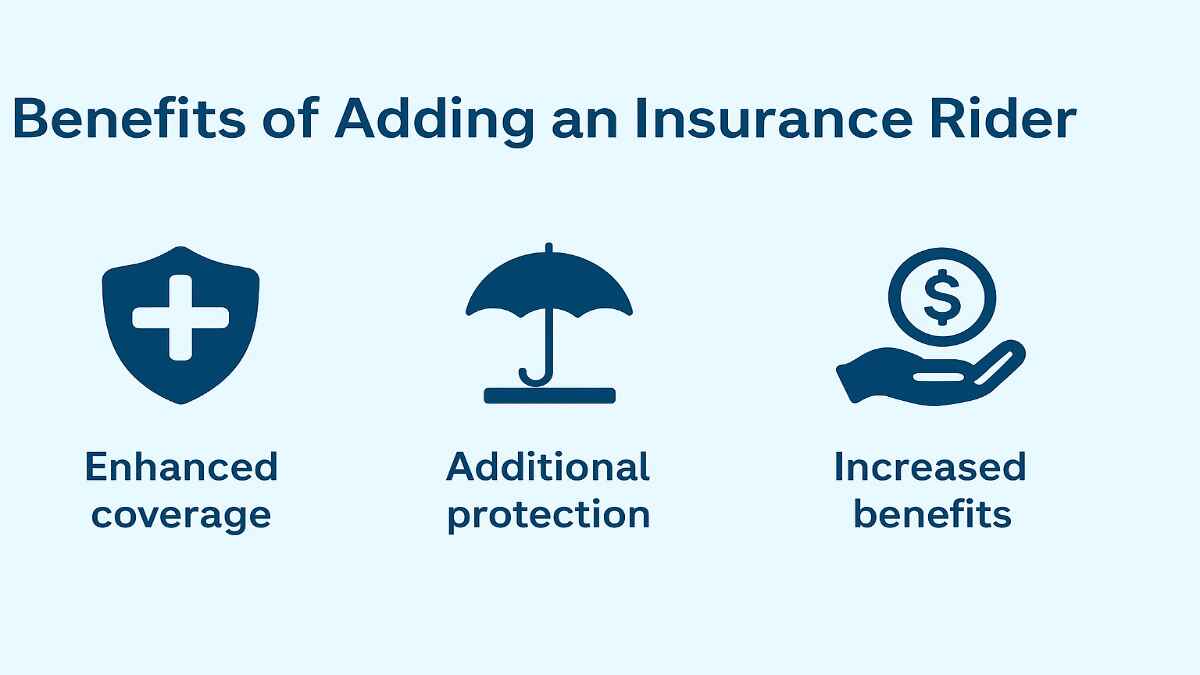
Okay, so why bother? Let’s weigh the pros to help you figure out what is an insurance rider and should you take it?
The biggest win is customization. In India, where family structures are diverse—from nuclear in cities to joint in villages—riders let you tailor protection. For example, a farmer in Punjab might add an income protection rider to his life policy for crop failure risks.
Cost-effectiveness is another plus. Buying a separate policy for critical illness could cost more than adding a rider. Riders often share the same underwriting, so no extra medical tests if you’re healthy.
Tax benefits? Absolutely! Under Section 80D for health riders or 80C for life, you get deductions. In a high-tax country like ours, this sweetens the deal.
Peace of mind is priceless. Imagine a Delhi techie with a heart condition— a critical illness rider means not dipping into savings for treatment. Statistics from the National Health Profile show hospital costs have doubled in a decade; riders cushion that blow.
But it’s not all rosy. What is an insurance rider and should you take it? Only if the benefits outweigh the costs, which we’ll discuss next.
Drawbacks and Hidden Costs of Insurance Riders
No article on what is an insurance rider and should you take it? would be complete without the cons. Riders aren’t free lunches.
First, they increase premiums. A 30-year-old adding a ₹10 lakh critical illness rider to a ₹1 crore term plan might pay ₹2,000-5,000 extra yearly. Over 20 years, that’s a chunk.
Exclusions galore: Riders have waiting periods (e.g., 90 days for critical illness) and don’t cover everything. Pre-existing diseases? Often excluded.
Over-insurance risk: If you add too many, you might pay for coverage you don’t need. A retiree in Bengaluru might not need an accidental rider if they rarely travel.
Claim processes can be tricky. Insurers like Bajaj Allianz require separate documentation for riders, leading to delays.
In India, mis-selling is an issue. Agents push riders for commissions. IRDAI has guidelines, but always read the policy wordings.
So, what is an insurance rider and should you take it? Balance the pros and cons. If you’re young and healthy, maybe skip; if vulnerable, go for it.
When Should You Consider Taking an Insurance Rider?

Timing is key in deciding what is an insurance rider and should you take it? Ideally, add them when buying the base policy—it’s cheaper and easier.
Life stages matter. Newly married? Think maternity or spousal protection riders. Parent? Child education riders in life policies.
Health history: If family has cancer, a critical illness rider is wise. In India, with pollution in cities like Kanpur, respiratory riders are emerging.
Budget check: Riders should be 5-10% of your income. Use online calculators from Policybazaar or insurers’ sites.
Compare options: Shop around. SBI Life might offer better rates than Max Life for the same rider.
Renewal time? Review and add if needs changed. But beware—adding later might require fresh medicals.
Ultimately, what is an insurance rider and should you take it? Yes, if it fills gaps in your coverage without breaking the bank.
Real-Life Examples from Indian Scenarios
To make it relatable, let’s look at stories illustrating what is an insurance rider and should you take it?
Take Raj, a 35-year-old IT engineer in Hyderabad. He bought a term plan but added an accidental death rider after a near-miss on the highway. When he met with an accident, the rider paid ₹20 lakhs extra, helping his family buy a home.
Or Priya, a homemaker in Chennai with diabetes. Her health policy had a critical illness rider. Diagnosed with kidney issues, she got ₹5 lakhs payout for dialysis, easing the burden.
Contrast with Amit in Kolkata, who skipped riders thinking they’re unnecessary. A stroke left him disabled; his base policy covered death but not living expenses. Regret city!
These tales show what is an insurance rider and should you take it? Can be a game-changer in India’s unpredictable life.
How to Choose the Right Rider for Your Needs

Selecting wisely is crucial for what is an insurance rider and should you take it? Start with self-assessment: List risks—job hazards, family health, lifestyle.
Research: Read IRDAI circulars or forums like Reddit’s r/IndiaInvest. Compare on aggregator sites.
Consult experts: Not just agents—financial planners or apps like Groww.
Fine print: Understand sum assured, premiums, exclusions.
Portability: In health insurance, riders can be ported under IRDAI rules.
Review annually: Life changes, so should your riders.
By doing this, you’ll know what is an insurance rider and should you take it? Tailored to you.
Common Myths About Insurance Riders Debunked
Myths can cloud judgment on what is an insurance rider and should you take it? Let’s bust some.
Myth 1: Riders are expensive. Truth: They’re affordable add-ons.
Myth 2: Base policy is enough. Truth: Gaps exist, especially in India with high medical inflation (10-15% yearly).
Myth 3: Claims are denied. Truth: If honest, claims are smooth—IRDAI ensures 90%+ settlement ratios.
Myth 4: Only for rich. Truth: Even middle-class folks benefit.
Clearing these helps decide what is an insurance rider and should you take it?
The Role of IRDAI in Regulating Riders
IRDAI plays a big part in what is an insurance rider and should you take it? They approve products, ensure fairness, and cap commissions.
Recent guidelines mandate clear disclosures. For ULIPs, riders can’t exceed base premiums.
This regulation makes riders trustworthy in India.
Comparing Riders Across Indian Insurers
While no tables, let’s compare narratively for what is an insurance rider and should you take it?
LIC’s riders are affordable but basic. Private ones like Tata AIA offer more options, like surgical benefit riders.
For health, Star Health has specialized riders for vector-borne diseases, relevant in monsoon-prone areas.
Choose based on service—claim ratios above 95% are good.
This comparison aids in what is an insurance rider and should you take it?
Future Trends in Insurance Riders in India
Looking ahead, what is an insurance rider and should you take it? Will evolve with tech.
AI-driven riders for personalized coverage, like mental health add-ons post-pandemic.
With Ayushman Bharat, riders might complement government schemes.
Sustainability riders for climate risks in flood areas like Assam.
Staying updated helps decide what is an insurance rider and should you take it? Tomorrow.
Tips for Buying and Managing Riders
Practical advice for what is an insurance rider and should you take it?
Buy online for discounts. Disclose everything to avoid rejections.
Track premiums via apps. Nominate beneficiaries.
If lapsing, revive with riders intact.
These tips ensure what is an insurance rider and should you take it? Works for you.
Case Studies: Success and Failures
More stories: A Mumbai businessman added a disability rider; post-injury, it paid income replacement.
Failure: A Jaipur teacher ignored riders; cancer treatment drained savings.
Lessons reinforce what is an insurance rider and should you take it?
Integrating Riders with Overall Financial Planning
Riders fit into bigger pictures. In India, with EPF and PPF, use them for protection, not investment.
Consult CFPs for holistic plans.
This integration clarifies what is an insurance rider and should you take it?
Conclusion: Making the Final Call
We’ve covered a lot on what is an insurance rider and should you take it? From basics to trends, it’s clear riders enhance protection but aren’t mandatory.
Assess your needs, budget, and risks. In India’s dynamic economy, they’re often worth it.
If unsure, start small—add one rider and see.
Remember, insurance is about security, not fear. So, ponder what is an insurance rider and should you take it? And decide wisely.
FAQ
What is the difference between an insurance rider and a standalone policy?
A rider attaches to your main policy for extra coverage, while a standalone is independent. Riders are cheaper but depend on the base.
Are insurance riders taxable in India?
Payouts from life riders are tax-free under Section 10(10D), but premiums qualify for deductions.
Can I add a rider midway through my policy term?
Yes, but it might involve extra costs or medical checks.
What happens if I don’t pay the rider premium?
The rider lapses, but the base policy might continue if premiums are paid.
Are riders available for senior citizens in India?
Yes, but with higher premiums and restrictions; check with insurers like New India Assurance.
How do I claim a rider benefit?
Submit documents like medical reports to the insurer; process is similar to base claims.
Is there a waiting period for riders?
Yes, typically 30-90 days for health-related ones.
Can riders be canceled?
Yes, but you might lose paid premiums; better to review before buying.
Do all insurers offer the same riders?
No, varies—public like LIC have standard, private have innovative ones.
Should freelancers take insurance riders?
Absolutely, for income protection against disabilities or illnesses.
Disclaimer: Moneyjack.in provides general financial information for educational purposes only. We are not financial advisors. Content is not personalized advice. Consult a qualified professional before making financial decisions. We are not liable for any losses or damages arising from the use of our content. Always conduct your own research.